
How Often to Clean Air Ducts in Georgia, GA: A Realistic Schedule Based on What’s Actually in Your System
Most Georgia homes need air duct cleaning every 2 to 4 years, not the generic 3-to-5-year interval you’ll see quoted everywhere. If your household includes pets, allergy sufferers, or anyone sensitive to pollen, plan on the shorter end of that range — and if you’ve got flex ductwork in a humid crawlspace with a shedding dog, you’re looking at closer to 18 to 24 months. Call Everest Air Duct Cleaning Service Georgia at (877) 565-7296 if you want an honest camera inspection rather than a calendar guess.
Why Georgia’s Climate Changes the Math
That three-year recommendation assumes a sealed, dry house with no pets, no allergies, and a well-insulated attic. Most Georgia homeowners have at least two of those conditions working against them. Scott Gray has been crawling through attics and chasing ductwork leaks in Georgia homes for over 20 years, and he’s seen what actually accumulates inside these systems — it rarely matches the tidy timelines printed on national HVAC association websites.
Georgia’s humidity is the primary accelerator. From June through September, return air crossing through your evaporator coil carries moisture levels that would be unthinkable in Arizona or Colorado. When that humid air hits cooler surfaces at flex duct sag points — particularly in crawlspace runs common in Decatur-area ranches and 1980s split-levels — condensation forms. That moisture doesn’t just smell musty when the system kicks on. It creates a substrate for microbial growth that bonds particulates to duct walls far faster than dry accumulation alone.
The bimodal pollen season compounds this. February through May brings tree pollen that filters through even tight envelope homes; August through October delivers weed pollen that seems to find every gap in older window seals. We’ve opened return plenums in October that looked like someone had shaken a yellow sheet inside. That’s not hyperbole — it’s what two decades of crawlspace-level experience looks like.
What We Actually Find at Different Intervals
- 12–18 months (pet households): Visible dander matting in return ducts, particularly bedrooms where dogs sleep. Rotobrush contact-cleaning pulls out clumps that have already restricted airflow at boot connections.
- 24–30 months (standard Georgia home): Moderate dust loading with early pollen staining at flex duct ridges. Nikro HEPA extraction still clears this efficiently without aggressive brushing.
- 36–48 months (homes with whole-home filtration): Honeywell or Aprilaire systems we install genuinely extend intervals — ducts show minimal loading, though coil inspection remains critical.
- 60+ months (never cleaned): Compacted layers requiring multiple passes, possible microbial staining, and frequently damaged flex duct that needs repair or sealing before cleaning proceeds.
Cleaning the Ducts vs. Servicing the Air Handler: Two Different Timelines
Here’s where most homeowners get confused — and where some companies profit from that confusion. The duct distribution system and the air handler/evaporator coil operate on different maintenance clocks, especially in Georgia.
Your ducts may legitimately need cleaning only every three years. Your coil, sitting in the path of humid return air all summer, typically warrants annual inspection in this climate. We’ve pulled coils that looked like green felt from microbial growth while the attached ductwork was merely dusty. The coil is a wet, dark, nutrient-rich environment — basically a petri dish from June through September.
At Everest, we separate these assessments. A camera inspection at your main trunk access and return plenum tells us whether the ducts need full Air Duct Cleaning services. A visual on the coil and blower assembly tells us whether you’re looking at a separate HVAC cleaning service or just a filter upgrade. We don’t sell you a full duct cleaning when a coil treatment and new media filter will solve your issue. That honesty is apparently a rarer thing than it should be.
Building Your Household’s Actual Cleaning Schedule
Instead of a fixed calendar date, run through these accumulation drivers. Each one that applies to your Georgia home pulls your interval shorter:
| Factor | Impact on Interval | What We Typically Observe |
|---|---|---|
| One or more shedding pets | Reduce by 12 months | Dander mats in return boots; hair wraps around dampers |
| Allergy or asthma sufferers in home | Reduce by 6–12 months | Pollen and dust mite antigen loading triggers symptoms before visible dust |
| Recent renovation or construction | Immediate cleaning, then reset interval | Drywall dust and fiberglass particulate embed in flex duct ridges permanently |
| Flex duct older than 15 years | Reduce by 6 months; inspect for sag points | Sag-point moisture damage; delaminating insulation |
| History of water intrusion or condensation issues | Reduce by 12 months; prioritize sanitizing | Microbial staining; musty startup odors |
| No whole-home filtration | Reduce by 6 months | Standard 1″ fiberglass filters pass 80%+ of particulate |
| Honeywell or Aprilaire IAQ system installed | Extend by 12–18 months | Captures particulate before duct settling; protects coil |
Count your factors. If you hit three or more on the reduction side, you’re looking at that 18-to-24-month range regardless of what any national guideline suggests. If you’re at zero or one with whole-home filtration, you might stretch to four years comfortably — though we’d still want a camera look at year three to confirm your Air Duct Cleaning investment is worth it.
What an Honest Inspection Actually Looks Like
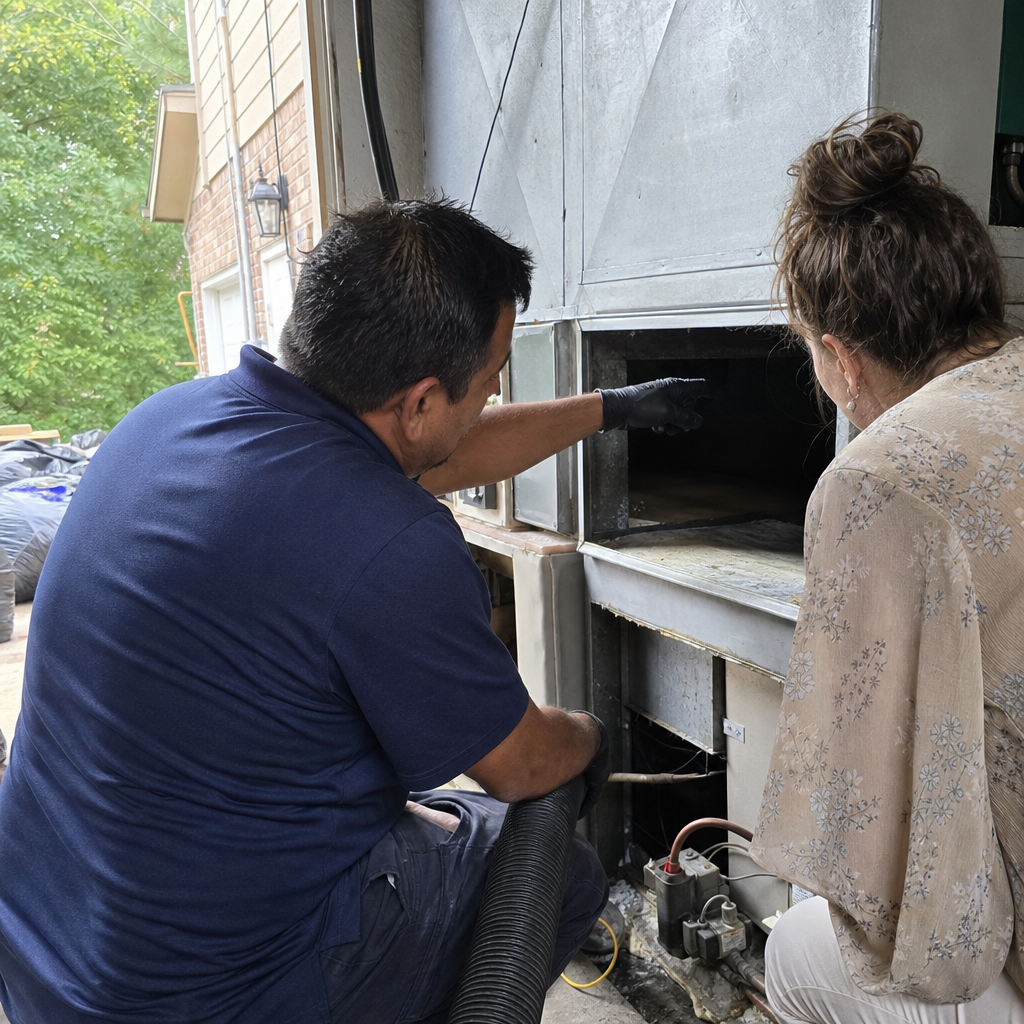
We start every assessment the same way: visual and camera inspection at the return plenum, main trunk access, and two to three representative branch runs. This takes 20–30 minutes and costs nothing. We’re looking for three things — loading depth, moisture indicators, and mechanical damage — because those determine whether you need a full cleaning, targeted service, or just better filtration.
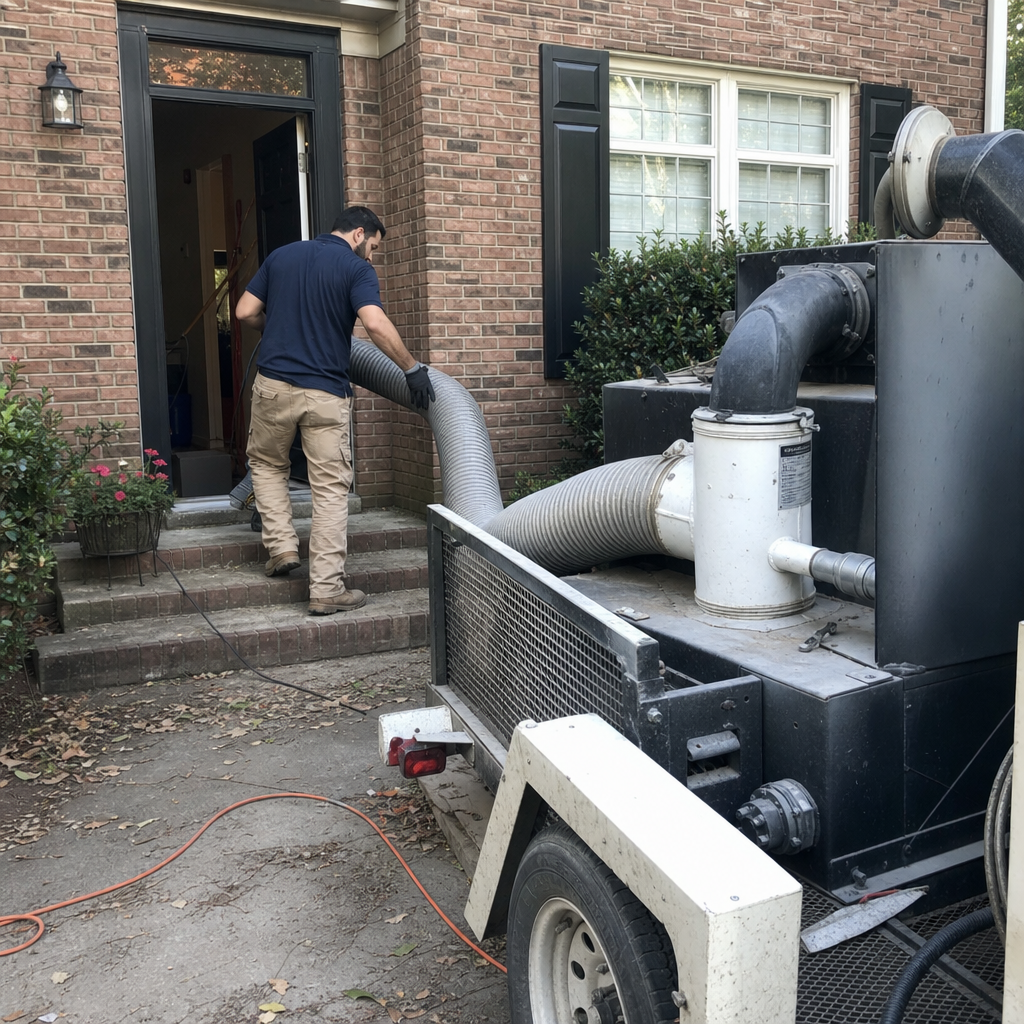
Loading depth is straightforward. A light coating you can still see metal through? Filter upgrade and coil check. Compacted material that obscures the duct wall? That’s when we bring in the Rotobrush and Nikro HEPA systems. Moisture indicators — water staining, microbial spotting, or delaminating flex duct insulation — tell us whether sanitizing with Abatement Technologies air scrubbers needs to join the scope. Mechanical damage, especially at flex duct sag points or crimped connections, means we may need duct repair and sealing before cleaning proceeds, or you’re just blowing money into a leaky system.
We’ve told homeowners their ducts didn’t need cleaning. We’ve also opened systems that hadn’t been looked at in a decade and found conditions that explained every respiratory issue the family had been fighting. If your ducts haven’t been looked at in a decade, you don’t have an air quality problem — you have an air quality certainty.
Key Takeaways for Georgia Homeowners
- The generic 3–5 year interval ignores Georgia’s humidity and pollen load; 2–4 years is more realistic for most homes
- Pets, allergies, and flex duct in crawlspaces push you toward 18–24 months
- Your evaporator coil needs annual inspection even when ducts don’t need cleaning
- Whole-home filtration from Honeywell or Aprilaire genuinely extends duct cleaning intervals
- A camera inspection eliminates guesswork and protects your budget
FAQs
Every 18 to 24 months if you have one or more shedding pets, particularly dogs that sleep in bedrooms where return ducts concentrate dander. Pet hair and skin cells mat in return boots and around dampers, restricting airflow and creating odor sources that standard filters can’t capture. We use Rotobrush contact-cleaning to physically dislodge these mats, then extract with Nikro HEPA vacuums — surface cleaning won’t touch what’s embedded. Call (877) 565-7296 for a free inspection if you’re noticing more dust on furniture or pet-related odors at system startup.
More frequent light cleanings cost less per visit and prevent permanent damage. A standard residential Whole House Air Duct Cleaning Cost in Georgia, GA typically runs $300–$500 for a single-system home when performed as maintenance; wait until compaction and moisture staining set in, and you’re looking at $600–$900 for multi-pass cleaning plus potential duct repair. Worse, heavily loaded systems strain your blower motor and reduce coil efficiency, spiking energy bills months before you schedule service. We inspect first and quote upfront — no surprises after we’re in your attic.
Yes — your duct system becomes a reservoir for both pollen infiltration and dust mite proliferation, especially during Georgia’s extended humid season. Tree pollen entering in spring embeds in existing dust layers; summer humidity then activates mite populations in that same material. When your system cycles, it redistributes these allergens room-to-room rather than filtering them. Homes with allergy sufferers typically benefit from 24-month cleaning intervals paired with Aprilaire media filters or Honeywell electronic air cleaners, which we install and integrate with existing HVAC systems. The combination of source removal and continuous capture is what actually moves the needle on symptoms.
Schedule a camera inspection if you notice any of these: visible dust puffing from registers at startup, musty or sour odors when the system cycles, uneven heating or cooling between rooms, or increased dust accumulation on surfaces within a week of cleaning. These symptoms indicate active loading or moisture issues that won’t improve with waiting. If none apply and you’re within your calculated interval, a filter change and coil inspection may suffice. Everest offers no-pressure assessments — we’ll tell you exactly what we see and whether a full cleaning, targeted service, or just better filtration is the right spend. Call (877) 565-7296 to book.
If you’d rather have it looked at than guess, Everest Affordable Air Duct Cleaning in Georgia, GA offers a no-pressure camera assessment — call (877) 565-7296 for a free estimate.
Written by Scott Gray, Owner & Lead Technician at Everest Air Duct Cleaning Service Georgia, serving Georgia, GA.