
Is Air Duct Cleaning Worth It in Georgia? Here’s the Honest Assessment from 20 Years in Local Attics
Air Duct Cleaning services are worth it for most Georgia homes that haven’t been serviced in 5+ years, especially those with aging flex duct, allergy sufferers, or post-renovation debris — but it’s a waste of money for newer homes with well-maintained systems and no moisture or pest issues. The difference comes down to your duct material, your home’s history, and whether the company uses contact-cleaning with HEPA extraction or just blows compressed air around. If you’re unsure where your system stands, call us at (877) 565-7296 for a no-pressure assessment.
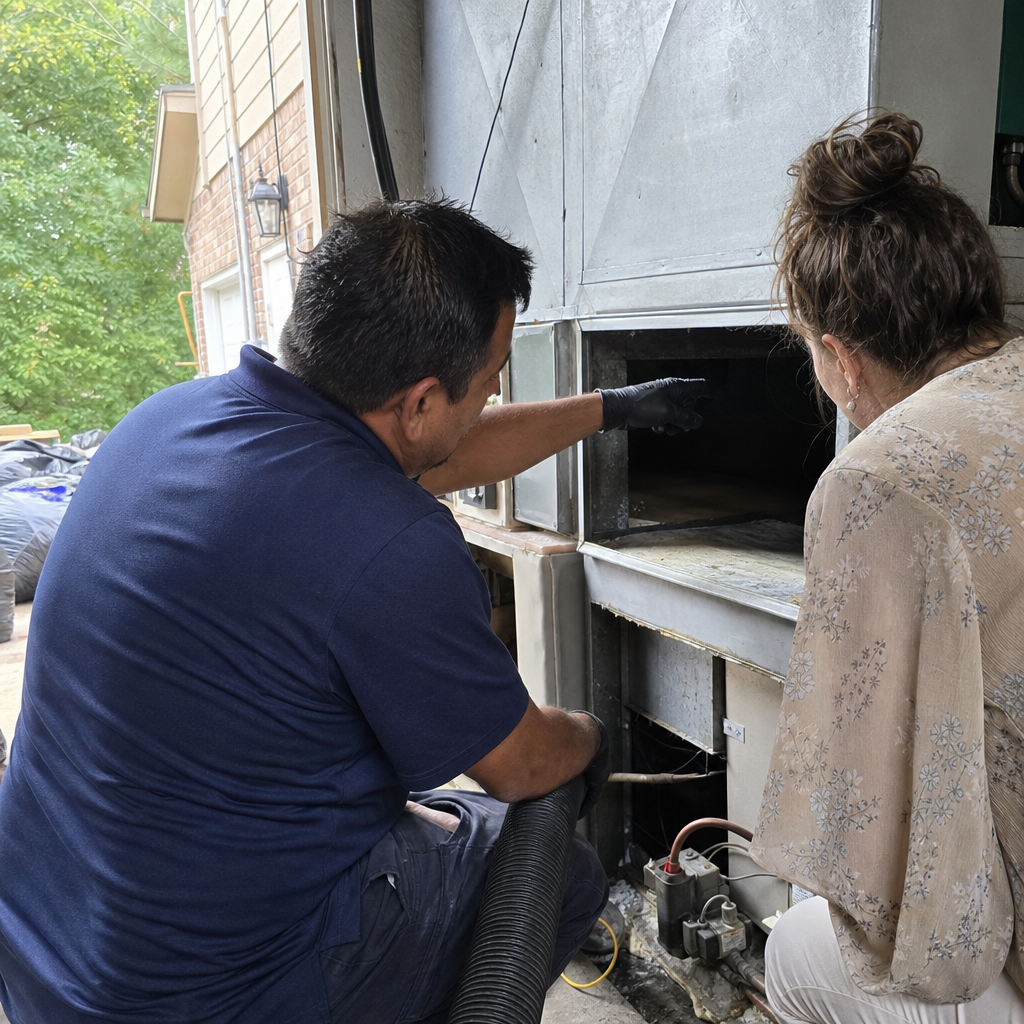
Back in 1997, the EPA published a fact sheet that’s still quoted in almost every online article about duct cleaning. The agency warned that routine cleaning had “not been shown to prevent health problems” and that dirty ducts didn’t necessarily mean dirty air. What gets left out is the context: that guidance was written before contact-cleaning equipment existed, before we understood biofilm accumulation in humid climates, and before Georgia’s housing stock shifted heavily to flex duct systems that sag, tear, and hold moisture in ways rigid metal ducts don’t. Scott Gray, Owner & Lead Technician at Everest Air Duct Cleaning Service Georgia, has spent two decades crawling through attics in Decatur, Marietta, and across the state — and he’ll tell you straight: the EPA’s skepticism was aimed at the “blow-and-go” operators who still show up with a compressor and a shop vac, not at the method we use with Rotobrush contact-cleaning and Nikro HEPA extraction.
Why the 1997 EPA Guidance Needs a Georgia-Specific Update
The EPA’s caution made sense for its era. In 1997, most duct cleaning was done by blowing compressed air through vents without simultaneous debris removal. That approach dislodges dust and deposits it elsewhere in the system — or back into your living space. The agency correctly identified this as potentially worse than doing nothing.
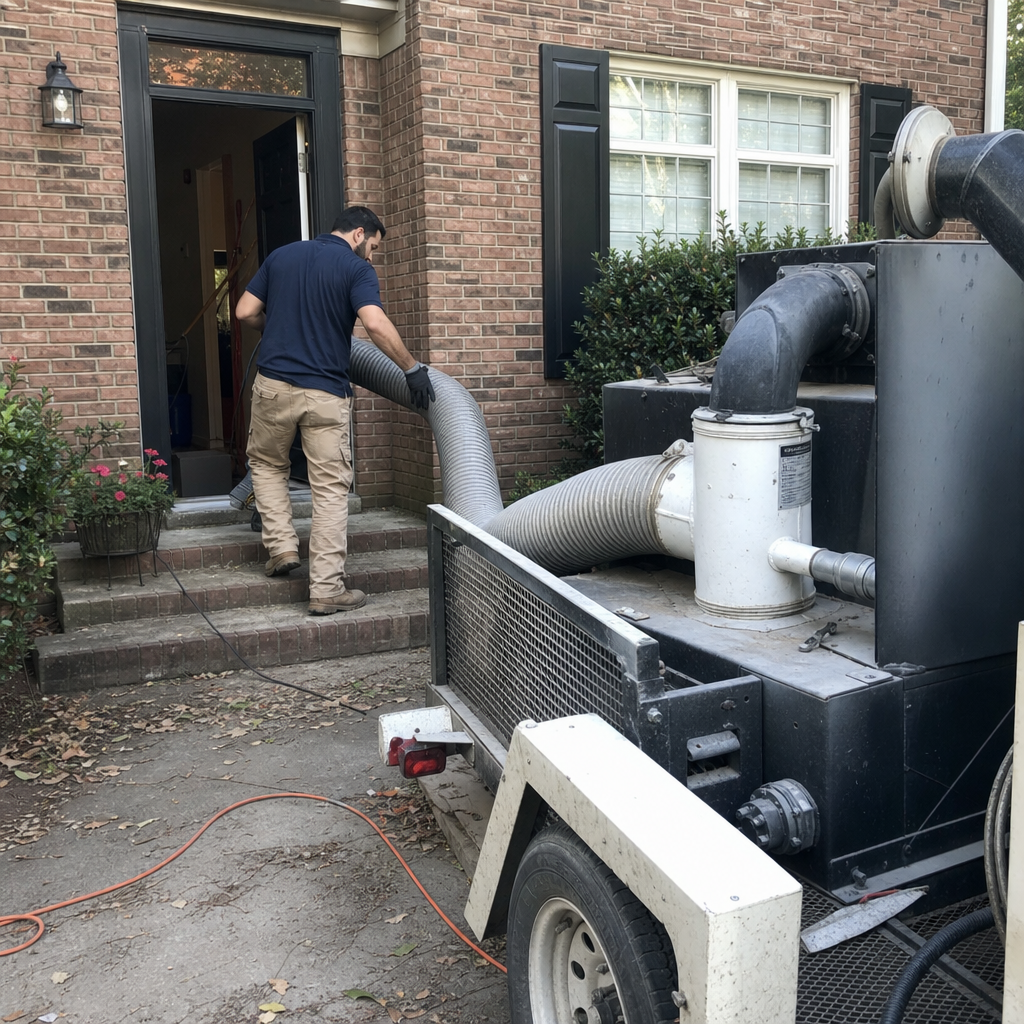
What changed? Equipment. Modern contact-cleaning systems like the Rotobrush use spinning bristles that physically scrub duct walls while a vacuum port immediately extracts loosened debris. Paired with Nikro HEPA vacuums rated for commercial remediation work, this captures particles down to 0.3 microns rather than redistributing them. The EPA never revised its guidance to account for this technological shift, and most requoted articles haven’t either.
More importantly, Georgia’s climate and housing stock create conditions that 1997 EPA researchers weren’t studying:
- Humidity-driven biofilm: Georgia’s average relative humidity sits above 70% for much of the year. Flex duct insulation in vented attics absorbs this moisture, creating a substrate for microbial growth that rigid metal ducts in drier climates rarely develop.
- Pollen loading: Oak, pine, and sweet gum pollen season runs February through May in Georgia, producing some of the Southeast’s highest airborne pollen counts. Duct systems draw this in through return air pathways; without cleaning, the same pollen load recirculates every cycle.
- Flex duct aging: Much of Georgia’s suburban housing — particularly 1980s–2000s construction in areas like Gwinnett County, Cobb County, and the I-285 perimeter — used flexible ductwork that’s now reaching 20–40 years of service. These systems sag, develop tears at connection points, and accumulate debris in low spots that rigid ductwork doesn’t create.
We’ve opened flex duct systems in Georgia homes where the internal insulation was so saturated with dust and moisture that it had compressed to half its original thickness — choking airflow and forcing the HVAC system to run longer cycles. That’s not a theoretical concern; it’s what Scott finds on a regular Tuesday in a 1994 ranch house off Memorial Drive.
When Duct Cleaning Is Genuinely Worth the Investment
After 433 jobs and a 4.9-star average, we’ve developed a clear framework for when cleaning delivers measurable benefit versus when it’s optional maintenance.
High-value situations — cleaning is strongly recommended:
- Visible mold or musty odors: If you smell mildew when the system cycles, or if inspection cameras show growth on duct surfaces, cleaning plus sanitizing with Abatement Technologies air scrubbers is necessary before the problem spreads.
- Confirmed rodent or insect activity: Droppings, nesting material, or chewed ductwork require removal and repair. We handle the full scope — cleaning, home duct sealing, and Guardsman sanitizing — so you’re not coordinating multiple contractors.
- Post-renovation: Construction dust contains drywall particulate, insulation fragments, and VOC-laden debris that standard HVAC filters don’t capture. We’ve found systems with 1/4-inch layers of renovation dust coating duct walls.
- System idle 2+ years: Unused ducts in Georgia’s humidity become stagnant reservoirs. We regularly clean systems in vacation homes and estate properties where the first cycle after months of disuse blasts concentrated debris.
- Flex duct with moisture damage: Sagging, torn, or water-stained flexible ductwork traps debris in ways that compressed-air cleaning can’t address. Contact-cleaning with HEPA extraction is the only method that physically removes this accumulation.
Moderate-value situations — cleaning helps but isn’t urgent:
- Homes with multiple pets and visible fur accumulation at registers
- Allergy sufferers experiencing increased symptoms indoors
- Aging systems (15+ years) with no prior cleaning record
- Homes near major pollen sources — Georgia’s pine belts, oak hammocks, or agricultural areas
Low-value situations — Scott will tell you to wait:
A well-maintained system in a home under five years old, with no pets, no recent renovation, no moisture events, and no allergy complaints, is unlikely to need cleaning. We’ve told homeowners exactly this on initial calls — and they tend to remember it when their situation changes. That honesty is apparently a rarer thing than it should be, and it’s a large part of why 433 neighbors have rated us 4.9 stars.
What “Before and After” Actually Looks Like With Professional Equipment
Generic duct cleaning pages show a dirty rag wiped across a vent cover. That’s theater, not evidence. Here’s what we measure and document on Georgia jobs:
| Measurement | Method | What It Tells You |
|---|---|---|
| Airflow at registers | Anemometer readings at each supply vent | Pre-cleaning restrictions vs. post-cleaning CFM improvement; we typically see 15–30% airflow recovery in heavily loaded systems |
| Visual inspection | Camera scope at access points and main trunk lines | Actual debris volume, duct condition, moisture damage, or pest evidence — recorded for homeowner review |
| Particulate counts | Handheld air quality meter (PM2.5/PM10) | Baseline indoor levels vs. levels during system cycling; post-cleaning reduction confirms extraction effectiveness, not just redistribution |
We use Rotobrush contact-cleaning systems because the physical bristle contact scrubs biofilm and adhered debris that air pressure alone won’t remove. The Nikro HEPA vacuum runs simultaneously at 5,000+ CFM, creating negative pressure that prevents escape into living spaces. Abatement Technologies portable air scrubbers supplement this with additional HEPA filtration during sanitizing work.
After cleaning, we can install Aprilaire media air cleaners or Honeywell whole-house filtration if the assessment reveals ongoing particle loading that duct cleaning alone won’t solve. That’s the full-scope approach — from dirty ducts to genuinely cleaner air, without handing you off to another contractor.
Georgia’s Pollen Problem: The Local Factor Most Articles Ignore
Here’s a specific that national “is it worth it” articles never touch: Georgia’s pollen season isn’t just long — it’s mechanically aggressive on duct systems.
Oak pollen peaks in March with grains large enough to settle in ductwork rather than passing through standard 1-inch filters. Pine pollen follows in April, coating surfaces with its distinctive yellow film. Sweet gum and grass pollens extend the load into May. By June, when Georgia humidity spikes, any accumulated organic material in ducts becomes a growth medium.
We’ve inspected systems in Buckhead townhomes and Decatur bungalows where the return ductwork held literal tablespoons of compacted pollen behind the filter rack — material that had been bypassing the filter for years and recirculating with every cycle. The homeowner’s “allergies got worse every spring” wasn’t coincidence; it was mechanical.
If your ducts haven’t been looked at in a decade, you don’t have an air quality problem — you have an air quality certainty.
Cost Context: What Duct Cleaning Actually Runs in Georgia
Price transparency matters for an “is it worth it” decision. See our breakdown of how much air duct cleaning costs in Georgia for 2026, based on our 2024–2025 pricing:
| Service Scope | Typical Range | What Affects Price |
|---|---|---|
| Standard residential duct cleaning (single system, up to 12 vents) | $350–$550 | System accessibility, vent count, duct material (flex vs. metal) |
| Larger homes or dual-zone systems | $550–$850 | Additional air handlers, extensive flex duct, multiple attic access points |
| Cleaning + sanitizing (mold/pest/post-renovation) | Add $150–$250 | Extent of contamination, need for Abatement Technologies air scrubber deployment |
| Duct repair or sealing identified during cleaning | $200–$600 | Scope of accessible damage; we handle this in-house rather than referring out |
These ranges reflect owner-operated pricing — Scott Gray runs the job directly, so there’s no franchise fee or subcontractor markup built in. For an exact quote on your system, call (877) 565-7296; estimates are free and include the camera inspection that lets you see what we’re seeing.
When We’re Honest: Scott’s Field Assessment of “Skip It” Situations
Not every system needs cleaning, and saying so builds more trust than upselling ever could. Here are situations where we’ve told Georgia homeowners to save their money:
- New construction, under 3 years: Ductwork is still clean unless there was a construction defect or remediation event.
- Meticulously maintained systems with 4-inch media filters: Homeowners who change high-MERV filters on schedule and have no pets or moisture issues often show minimal debris on inspection.
- Recently cleaned by a reputable contact-cleaning company: If it was done right with HEPA extraction, 3–5 years is a reasonable interval for most Georgia homes.
- All-metal rigid duct in conditioned space: Rare in Georgia residential, but when present, these systems accumulate far less debris than flex duct in vented attics.
Scott got his start in HVAC fundamentals at Georgia Piedmont Technical College, where a hands-on instructor drilled into him that the air inside a house tells you everything about how well it’s maintained. That training still shows up in how he evaluates systems — he’ll spend 20 minutes in your attic before recommending anything, and he’ll show you the camera footage so you can decide for yourself.
How to Vet a Duct Cleaning Company in Georgia
If you’ve decided cleaning is worth exploring, the company you choose matters as much as the decision itself. Georgia’s market includes everything from certified specialists to carpet cleaners with a duct attachment.
Ask specifically:
- Do you use contact-cleaning with simultaneous HEPA extraction, or compressed air only? (Blow-and-go is the method the EPA rightly criticized.)
- Will the owner or lead technician work my job, or do you subcontract? (At Everest, Scott Gray is on every job — your home gets 20 years of expertise, not an entry-level substitute.)
- What equipment brands do you use? (Generic claims suggest generic tools. We name ours: Rotobrush, Nikro, Abatement Technologies.)
- Can you handle repairs if you find damage? (Many cleaners find torn flex duct and have no capability to fix it — we handle Air Duct Cleaning in Georgia from cleaning through repair and sealing.)
- What’s your review volume and rating? (433 verified reviews at 4.9 stars is a track record you can verify; “trusted by thousands” is not.)
FAQs
Standard residential duct cleaning in Georgia typically costs $350–$550 for a single system with up to 12 vents, with larger homes or dual-zone systems running $550–$850. For whole-home systems, check our Whole House Air Duct Cleaning Cost in Georgia, GA page. The exact price depends on your duct material, system accessibility, and whether sanitizing or repairs are needed. Call (877) 565-7296 for a free, no-pressure estimate — we’ll inspect your system with a camera scope so you know what you’re paying for.
Cleaning is almost always cheaper than replacement — typically 15–25% of the cost of full ductwork replacement — but replacement becomes necessary when flex duct is extensively torn, water-damaged, or contaminated beyond what cleaning can address. We find this most often in Georgia homes with 20+ year old flex duct in vented attics where heat and moisture have degraded the material. During our inspection, we’ll show you exactly what we’re seeing and recommend cleaning, repair, or replacement based on condition rather than a one-size-fits-all approach.
Yes, when the duct system is actually loaded with accumulated pollen, pet dander, or dust mite debris — which we confirm with camera inspection and particulate measurement rather than assuming. Georgia’s February–May pollen season deposits significant organic material in ductwork, and we’ve measured measurable indoor particulate reduction after contact-cleaning with HEPA extraction. For homes with ongoing allergy issues, we can also install Aprilaire or Honeywell whole-house filtration to address particle loading that duct cleaning alone won’t solve.
Most Georgia homes with flex duct in vented attics benefit from cleaning every 3–5 years, though homes with multiple pets, allergy sufferers, or post-renovation debris may need more frequent service. Homes with well-maintained systems, no moisture issues, and high-quality filtration can sometimes extend to 7 years. The specific interval depends on your duct material, local pollen exposure, and whether you’ve had any pest or moisture events — which is why we start with an inspection rather than a calendar-based recommendation.
If you’d rather have your system looked at, Everest Air Duct Cleaning Service Georgia offers Affordable Air Duct Cleaning in Georgia, GA with a no-pressure assessment — call (877) 565-7296 to schedule, or ask for Scott Gray directly if you want the owner on your job.
Written by Scott Gray, Owner & Lead Technician at Everest Air Duct Cleaning Service Georgia, serving Georgia, GA.