
Last updated July 11, 2026
Seasonal Air Duct Cleaning Care for Atlanta: Year-Round Homeowner’s Guide
In Atlanta, your air conditioning runs roughly 5–6 months, your heating runs 3–4 months, and there are only a few weeks of shoulder season where neither is running — which is actually your best window for duct cleaning, and almost no one uses it. Most homeowners here treat duct cleaning as a “when I remember it” chore, but the reality is that Atlanta’s near-constant HVAC operation creates a unique contamination cycle that northern climates simply don’t experience. Over 20 years of crawling through attics in Buckhead, Decatur, and Sandy Springs, we’ve learned that timing your duct maintenance to Atlanta’s actual weather patterns — not a generic calendar — can mean the difference between a quick cleaning and a system struggling with restricted airflow for an entire season. This guide breaks down exactly when, why, and how to care for your ducts through every phase of Atlanta’s year.
Quick Answer
The optimal time for air duct cleaning in Atlanta is late October through mid-November, when your system is between cooling and heating seasons and technicians have scheduling flexibility. Most Atlanta homes need professional duct cleaning every 3–5 years, though homes with pets, allergy sufferers, continuous fan operation, or post-renovation conditions may need service every 2–3 years. Spring and summer bring specific risks — pollen infiltration and humidity-driven mold pressure — that make seasonal inspection and targeted cleaning more valuable here than in climates with true system downtime.
Table of Contents
- Why Atlanta Needs a Different Approach to Duct Cleaning
- Fall: The Optimal Cleaning Window (Late October–Mid-November)
- Spring: Pollen and the Return Duct Problem
- Summer: Humidity and Mold Pressure
- Winter: Heating Load and Dry Air Issues
- After Severe Weather: What to Inspect
- Continuous Fan Operation: Changing the Timeline
- Common Mistakes to Avoid
- When to Call a Professional
- Frequently Asked Questions
- The Bottom Line
Why Atlanta Needs a Different Approach to Duct Cleaning
Most national duct cleaning advice assumes a clear heating season and cooling season with significant downtime between them. That assumption fails in Atlanta. Our Air Duct Cleaning in Atlanta work reveals a pattern we don’t see in northern markets: the average Atlanta HVAC system switches modes 4–6 times per year, often with only days of rest rather than weeks.
This near-continuous operation creates three local conditions that change how ducts accumulate and hold contamination:
- No natural “settling” period: In climates with true shoulder seasons, dust and debris that enters during one season can settle before the next cycle begins. In Atlanta, the fan rarely stops long enough for this to happen, so particulate keeps circulating and embedding.
- Humidity cycling: Summer cooling mode pulls moisture through the return side; winter heating mode dries the supply side. This repeated wet-dry cycle hardens debris onto duct walls, making it more resistant to casual vacuuming.
- Pollen and organic loading: Atlanta’s extended tree pollen season (February through April, with a secondary grass pollen peak in May) introduces biological material that combines with household dust to form a sticky, layered buildup we call “felted debris” — it’s noticeably harder to remove than the dry, powdery dust found in desert climates.
In our experience, a duct system in a typical Atlanta ranch home built in the 1980s or 1990s — common across East Atlanta, Kirkwood, and the Perimeter area — will accumulate roughly 40% more debris in the same time period as an identical system in Indianapolis or St. Louis. The difference isn’t the home; it’s the runtime hours and humidity profile.
This is why we don’t recommend following generic “every 3–5 years” guidance without adjusting for Atlanta’s specific operating conditions. The schedule needs to match the load.
Fall: The Optimal Cleaning Window (Late October–Mid-November)
Late October through mid-November is the single best window for duct cleaning in Atlanta, and it’s consistently underutilized. Here’s why this timing works so specifically for our market:
- System at rest: By late October, most homes have cycled off cooling but haven’t yet needed consistent heating. The ducts are empty of active airflow, allowing thorough agitation and extraction without recontaminating spaces during the cleaning process.
- Technician availability: This is the slowest period for HVAC service calls across metro Atlanta. Companies that are booked three weeks out in July can often schedule within 3–5 days in early November — and you’ll get more time for a complete inspection, not a rushed job between emergency calls.
- Pre-heating-season correction: Any issues found during cleaning — disconnected ducts, compromised insulation, pest entry points — can be repaired before the heating load begins. We’ve found cracked duct boots and separated flex connections in attics across Druid Hills and Virginia-Highland that would have leaked heated air and driven up gas bills all winter.
- Post-pollen recovery: The spring pollen load has had months to work through the system. Fall cleaning captures this accumulated material before it becomes a reservoir for winter’s drier, more static-prone air to redistribute through the house.
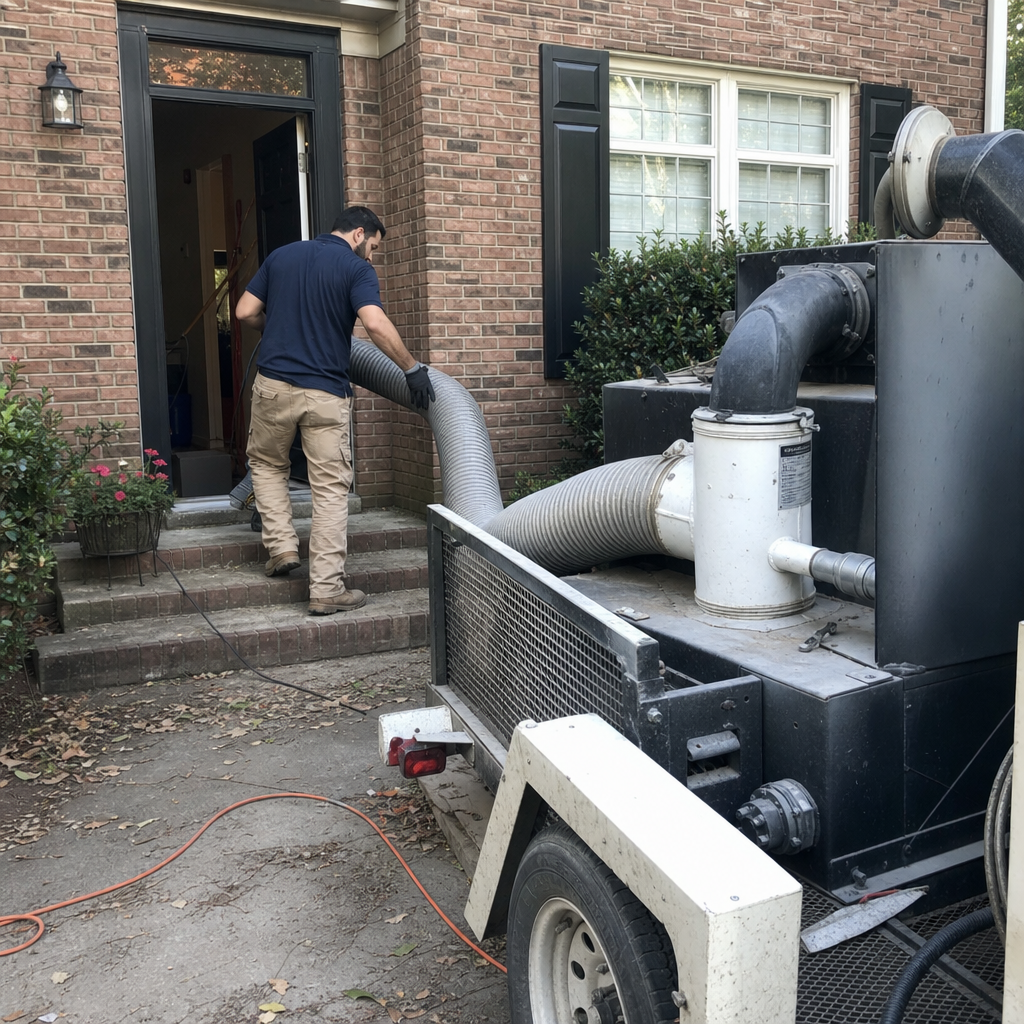
We typically see a 30–40% increase in scheduling flexibility for our Everest Air Duct Cleaning Service Georgia home customers who book in this window versus July or January. The work itself also proceeds more efficiently: without active heating or cooling running, we can seal registers temporarily and run our Nikro HEPA extraction at full negative pressure without fighting the system’s own blower.
For homes with gas furnaces, this timing carries an additional safety consideration. Fall duct cleaning includes visual inspection of the heat exchanger area and flue connections — not a replacement for furnace maintenance, but a complementary check that catches issues a standard HVAC tune-up might miss if the technician doesn’t enter the duct system itself.
Spring: Pollen and the Return Duct Problem
March through May in Atlanta isn’t just allergy season for people — it’s the heaviest loading period for your duct system’s return side. The difference in how this affects your home depends heavily on one factor most homeowners haven’t considered: the condition of your duct boots and return air pathways.
In older Atlanta homes, especially those with original ductwork from the 1960s–1980s common in neighborhoods like Grant Park, Candler Park, and the older sections of Decatur, we regularly find leaky return duct boots in crawlspaces and attics. These gaps pull in unfiltered air from the very spaces where pollen-laden outdoor air infiltrates. The result: your filter never sees that pollen. It enters the return stream after the filter, coats the evaporator coil, and embeds in the duct liner.
By contrast, homes with well-sealed return systems — typically newer construction or homes that have had duct sealing work — show a completely different contamination pattern. The pollen loads the filter (which you can see and replace) rather than the duct interior. These homes can often extend their cleaning interval by a full year or more.
Here’s what we inspect and address during spring service calls:
- Return duct pressure testing: We check for negative pressure leaks that pull crawlspace or attic air into the system. In humid spring conditions, these leaks also introduce moisture that combines with pollen to form the sticky “felted debris” mentioned earlier.
- Evaporator coil inspection: The coil is the first surface hit by return air. A pollen-coated coil reduces airflow, raises system pressure, and can freeze up in cooling mode. Our HVAC Cleaning in Atlanta service addresses this directly.
- Filter housing integrity: A filter that doesn’t seat properly — common in retrofit media cabinets — bypasses 15–30% of air around the media. Spring is when this bypass becomes most visible as dust accumulation on the downstream duct walls.
- Outdoor air intake calibration: For homes with fresh air intakes (increasingly common in Energy Star builds around Alpharetta and Johns Creek), we verify damper operation. A stuck-open intake in April pulls maximum pollen directly into the system.
If your spring allergies spike indoors despite a clean filter, the pollen is likely entering downstream of filtration. That’s a duct integrity problem, not a filter problem.
Summer: Humidity and Mold Pressure
Atlanta’s summer dew points regularly reach 70°F+ from June through September. This isn’t uncomfortable — it’s actively dangerous for duct systems that have accumulated organic debris and have any condensation points. The critical interaction we see: a dirty evaporator coil combined with a dirty return duct liner creates a sustained moisture reservoir that drives mold growth.
Here’s the mechanism. When the coil is coated with dust and pollen, its heat transfer efficiency drops. The coil runs colder than designed to achieve the same cooling output. Colder surface temperatures mean more condensation — often exceeding the drain pan’s removal capacity or causing blow-off into the return plenum. That moisture contacts the return duct liner, which if already loaded with organic debris, becomes a mold substrate within 48–72 hours of sustained wetting.
We see this pattern most in homes that:
- Run cooling continuously during July–August without coil cleaning
- Have fiberglass duct liner in the return plenum (common in 1990s–2000s Atlanta construction)
- Are set to “auto” fan mode, which allows moisture to stagnate in off cycles rather than being evaporated
- Have supply ducts in vented crawlspaces where ground moisture adds to the load
Summer isn’t typically a cleaning season — you’re not going to shut down cooling for duct work in August — but it is a critical inspection and prevention season. We recommend a mid-summer HVAC cleaning check that includes:
- Coil cleaning with foaming cleaner and proper drainage verification
- Return plenum and first 10 feet of return duct visual inspection for moisture staining or liner degradation
- Condensate drain line flushing (we use nitrogen pressure, not just shop-vac suction)
- Supply register temperature and humidity readings to identify restricted ducts that may be causing system overwork
For homes with persistent summer humidity issues, we also install Aprilaire whole-home dehumidifiers as part of our air quality services — these integrate with the duct system and reduce the moisture load that drives mold pressure.
Winter: Heating Load and Dry Air Issues
Atlanta winters are mild compared to northern markets, but January and February still bring sustained heating operation that changes duct conditions. Gas furnaces produce hotter, drier supply air than heat pumps, and this thermal stress reveals problems that cooling mode conceals.
The primary winter issue we encounter: thermal expansion of duct seams and connections that were marginally sealed. Every heating cycle flexes metal ductwork; after 20+ years of Atlanta heating seasons, this cycling loosens tape and separates connections. The heated air escaping into attics and crawlspaces doesn’t just waste energy — it creates pressure imbalances that pull cold, dusty air into the return system from those same spaces.
Winter also dries accumulated debris, making it more mobile. That “dusty smell” when the furnace first kicks on in November isn’t normal — it’s the system redistributing material that settled during the brief fall downtime. If the smell persists beyond the first few cycles, the debris load is excessive and needs removal.
Specific winter maintenance we recommend:
- Register and grille inspection: Heated air accelerates the breakdown of plastic grilles and can warp metal ones. Damaged grilles create gaps where debris falls back into the duct.
- Filter upgrade to MERV 11–13: Winter’s lower humidity means less filter loading from moisture, so you can run higher filtration without excessive pressure drop. This captures more of the particulate that dry air keeps suspended.
- Humidifier assessment: If you’re running portable humidifiers, you’re adding moisture to the air without addressing the duct distribution. Central humidifiers (we install Aprilaire units) integrate with the duct system and avoid the mold risks of over-humidifying single rooms.
- Post-holiday cleaning: The combination of increased cooking, candle use, and occupancy during November–December loads the system with particulate that January heating then redistributes.
We don’t typically perform full duct cleaning in peak winter — the heating interruption is too disruptive — but we do perform duct repair and sealing work that can be completed in sections, keeping heat operational in most of the home.
After Severe Weather: What to Inspect
Atlanta’s severe weather profile — March–April tornado risk, summer derechos, and periodic hail events — creates duct-specific damage that homeowners rarely connect to their HVAC system. After any significant wind or hail event, there are four specific duct inspections we recommend:
- Attic duct displacement: High winds create pressure differentials across roof vents and soffits that can shift flex duct runs. We’ve found completely detached ducts in attics across Roswell and Marietta after storms, with the homeowner unaware because the system still “runs” — it’s just conditioning the attic.
- Crawlspace water intrusion: Heavy rain with wind-driven penetration can flood crawlspaces where supply ducts run. Even temporary flooding saturates duct insulation, and once wet, fiberglass insulation never fully dries in Atlanta’s humidity. It becomes a mold source.
- Pest entry creation: Hail damage to siding, soffits, or roof decking creates entry points for rodents and insects. We’ve extracted nesting material from ducts in Sandy Springs homes where squirrels entered through a dime-sized gap created by wind-lifted flashing — then chewed into the duct system from the attic.
- Outdoor unit debris impact: While not strictly duct damage, hail and wind-driven debris can damage condenser coils and fan blades, reducing system efficiency and causing longer runtimes that increase duct loading. This is a secondary effect, but it’s real.
After the March 2023 storms that tracked across Fulton and DeKalb counties, we performed a surge of inspections that found storm-related duct damage in roughly 15% of homes checked — damage the homeowners hadn’t noticed because the system was still producing airflow at the registers. The disconnected ducts were conditioning attics and crawlspaces, not living spaces, but the thermostat was satisfied through extended runtime.
Document with photos any visible damage to your home’s exterior after severe weather, then schedule a duct inspection if you notice uneven heating/cooling, unexpected energy bill increases, or musty odors in the weeks following.
Continuous Fan Operation: Changing the Timeline
A significant and growing number of Atlanta homeowners run their system fan continuously — either for air circulation comfort, to support whole-home air quality equipment, or because they’ve been advised it “evens out” temperature stratification. This choice fundamentally changes how ducts load with particulate and how quickly cleaning becomes necessary.
With on-demand fan operation (the “auto” setting), your ducts experience roughly 1,500–2,500 hours of airflow annually in Atlanta’s climate. With continuous operation, that jumps to 8,760 hours — a 3.5x to 5.8x increase in particulate exposure time. The contamination isn’t just more; it’s different. Continuous airflow keeps debris suspended longer, allowing it to reach and embed in areas that intermittent operation never touches — the far reaches of long duct runs, the upper surfaces of horizontal ducts, and the back sides of register vanes.
We see two distinct patterns in continuously operated systems:
- Even loading distribution: Rather than heavy accumulation near the air handler and tapering toward distant registers, continuous operation distributes debris more uniformly. This means the entire system needs attention, not just the trunk lines.
- Filter saturation acceleration: A MERV 8 filter that might last 90 days in auto mode loads in 30–45 days with continuous operation. Homeowners who don’t adjust their filter change frequency create bypass conditions that accelerate duct contamination.
For homes with continuous fan operation, we recommend:
- Reducing the cleaning interval from 3–5 years to 2–3 years
- Upgrading to MERV 11 filtration minimum, with quarterly filter changes
- Adding a whole-house air cleaner (we install Honeywell and Aprilaire electronic and media systems) to reduce the particulate load entering the duct system
- Annual HVAC cleaning that includes the blower wheel and evaporator coil, not just filter replacement
The benefit of continuous operation — improved air mixing and filtration opportunity — is real, but only if the system is maintained to handle the increased load. Without that maintenance, you’re circulating contaminated air 24/7 rather than 8–12 hours daily.
Common Mistakes to Avoid
- Scheduling cleaning during peak HVAC season: In July or January, Atlanta technicians are stretched thin and may rush the job. You’re also interrupting system operation when you need it most. The shoulder seasons exist — use them.
- Ignoring the return side: Homeowners often focus on supply registers (where they feel air) while the return ducts (where air is pulled in) accumulate the heaviest contamination. A cleaning that only addresses supplies misses 60% of the problem.
- Using the lowest bid without equipment verification: Portable shop vacuums with 2-inch hoses cannot achieve the negative pressure and agitation needed for Atlanta’s humidity-hardened debris. Ask specifically whether the company uses contact-cleaning agitation (we use Rotobrush systems) and HEPA extraction (we use Nikro units).
- Cleaning without inspecting: Duct cleaning that doesn’t include a pre-cleaning video inspection and post-cleaning verification is incomplete. We’ve found collapsed flex duct, previous pest infestations, and disconnected boots that cleaning alone would not reveal or fix.
- Treating duct cleaning as a standalone event: In Atlanta’s climate, cleaning without addressing the conditions that caused contamination — leaky returns, inadequate filtration, coil fouling — means you’ll be cleaning again sooner than necessary. The full scope matters.
- Neglecting dryer vents seasonally: Dryer Vent Cleaning in Atlanta is often scheduled separately from duct cleaning, but the two systems share attic and wall chases. A clogged dryer vent increases humidity in those shared spaces, contributing to duct moisture loading. Coordinate the services.
- Assuming new construction is clean: Atlanta’s building boom means many homeowners skip initial duct cleaning, assuming new ducts are clean. Construction debris — drywall dust, insulation fragments, sawdust — is often substantial in new systems, and the first 6–12 months of operation embeds this material permanently if not removed.
When to Call a Professional
Call for professional duct inspection and cleaning when you notice persistent dust accumulation shortly after cleaning, uneven heating or cooling between rooms, visible mold or moisture in registers, musty odors when the system runs, or energy bills that increase without usage changes. After any home renovation, even “minor” projects, construction debris enters the duct system and should be professionally removed before it embeds.
Everest Air Duct Cleaning Service Georgia offers free estimates in Atlanta — call (877) 565-7296. Scott Gray personally evaluates every project and performs the work directly, bringing 20 years of crawlspace-level experience to your inspection. We use Rotobrush contact-cleaning systems, Nikro HEPA vacuums, and Abatement Technologies air scrubbers — the same equipment trusted in commercial remediation work — and we handle the full scope from dirty ducts through repair, sealing, and sanitizing, with Honeywell and Aprilaire air quality products available for installation.
Frequently Asked Questions
Professional air duct cleaning in Atlanta typically ranges from $400–$900 for a standard single-system home, with larger homes, multiple systems, or homes requiring repair work falling at the higher end. The price varies with home size, duct accessibility (crawlspace vs. basement vs. attic), and whether the service includes HVAC cleaning, sanitizing, or dryer vent work. Call (877) 565-7296 for a free estimate — we price by the scope of work, not by a flat rate that doesn’t fit your system.
Repair is almost always more cost-effective than full replacement for isolated damage — a disconnected boot, a crushed flex run, or a separated seam typically runs $150–$400 to repair versus $2,000–$5,000+ for full duct replacement. We only recommend replacement when the duct material itself is degraded (common with water-saturated fiberglass duct board) or when the original design is so poorly configured that repairs won’t solve airflow problems. Call for an inspection and we’ll show you exactly what you’re dealing with.
Same-day service is sometimes available during shoulder seasons (October–November, March–April) but rarely during peak HVAC demand periods. We prioritize thoroughness over speed — Scott Gray performs every job personally, so scheduling depends on existing commitments. For urgent situations (post-renovation debris, suspected mold, or system airflow failure), we’ll work to accommodate within 24–48 hours. Call (877) 565-7296 and we’ll give you a realistic timeline.
Atlanta’s tree pollen season (February–April, peaking in March) introduces particles small enough to pass standard filters and large enough to embed in duct surfaces. The specific risk is pollen entering through leaky return ductwork in crawlspaces and attics, bypassing filtration entirely. Homes with well-sealed ducts and MERV 11+ filters see minimal interior pollen loading; homes with original 1980s–1990s ductwork often have significant pollen accumulation in the return plenum and evaporator coil area. Spring inspection with pressure testing identifies which condition applies to your home.
Clean ducts can reduce energy consumption by 5–15% when airflow restriction was the primary problem, but the effect varies. Where we see the most consistent savings is after cleaning combined with duct sealing — the sealing prevents conditioned air loss that cleaning alone doesn’t address. In Atlanta’s climate, with near-continuous system operation, even a 10% efficiency improvement compounds significantly across a year of runtime. We measure before-and-after static pressure and temperature differential to document actual improvement, not just promise it.
Mold in ducts typically announces itself through musty odors when the system first starts, visible discoloration on register surfaces, or allergy symptoms that worsen when home and improve when away. In Atlanta’s humid summers, the most common mold location is the return plenum and first few feet of return duct, where evaporator coil condensation meets organic debris. We use borescope inspection to verify mold presence before recommending remediation — odor alone can indicate mildew on register surfaces rather than systemic duct contamination. Call for inspection if you suspect mold; we’ll show you what we find before recommending any service.
The Bottom Line
Atlanta’s unique climate — near-continuous HVAC operation, high humidity, and extended pollen seasons — demands a seasonal approach to duct care that generic advice doesn’t provide. The key takeaways: schedule your primary cleaning in late October through mid-November when the system rests and technicians have availability; inspect for pollen infiltration and return duct leaks each spring; manage humidity and coil cleanliness through summer to prevent mold pressure; check for storm damage and thermal cycling wear each winter; and if you run continuous fan operation, increase your maintenance frequency accordingly. Duct cleaning isn’t a calendar appointment — it’s a response to how your specific system operates in Atlanta’s specific conditions.
Written by Scott Gray, Owner & Lead Technician at Everest Air Duct Cleaning Service Georgia, serving Atlanta since 2006.