
Last updated July 11, 2026
The Complete Guide to Air Duct Cleaning in Atlanta
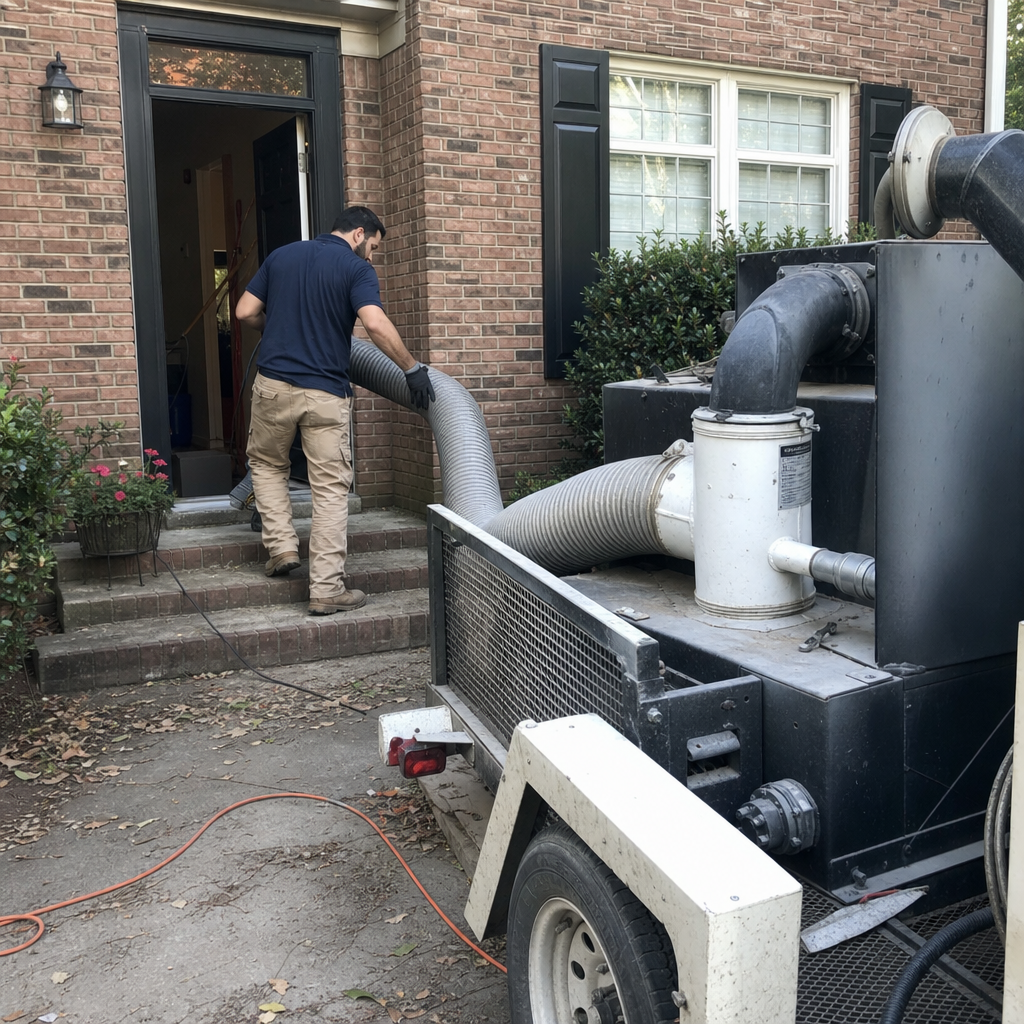
Atlanta ranks in the top 10 worst U.S. cities for seasonal allergies — yet most duct cleaning guides homeowners find online were written for arid climates where mold pressure inside ductwork is a fraction of what Georgia homes face. In two decades of crawling through Atlanta attics and crawlspaces, we’ve learned that Everest Air Duct Cleaning Service Georgia home owners need advice shaped by humid subtropical reality, not generic national templates. This guide covers how Atlanta’s red clay dust, oak pollen loads, and 1990s construction boom flex-duct configurations create contamination patterns unique to this market — and what actually works to clean them.
Quick Answer
Professional air duct cleaning in Atlanta typically costs $300–$700 for a standard single-family home and should be performed every 3–5 years due to our humid climate’s accelerated microbial growth. A thorough Atlanta-specific cleaning includes contact-brush agitation to break pollen biofilm, HEPA extraction, and static pressure verification — not just vacuum suction through a vent cover.
Table of Contents
- How Atlanta’s Climate Creates Unique Duct Contamination
- Flex Duct vs. Sheet Metal: Why Material Dictates Cleaning Method
- Atlanta’s Tree Pollen and the Biofilm Problem
- The 1990s–2000s Construction Boom: Hidden Flex Duct Traps
- How to Verify Cleaning Worked: Static Pressure Readings
- Crawlspace and Attic Variables in Atlanta Ranch Homes
- What Professional Air Duct Cleaning in Atlanta Includes
- How Often Should Atlanta Homes Clean Their Ducts?
How Atlanta’s Climate Creates Unique Duct Contamination
Atlanta’s humid subtropical climate isn’t just uncomfortable for humans — it’s an engineered environment for biological growth inside ductwork. Our average relative humidity hovers near 70% for much of the year, with summer peaks pushing 85% in shaded crawlspaces where supply lines run. That moisture load changes everything about how ducts get dirty and how they must be cleaned.
In Phoenix or Denver, duct contamination is primarily inert dust. In Atlanta, we deal with active ecosystems. Here’s how the climate drives distinct contamination patterns:
- Year-round condensation cycles: When 95°F outdoor air hits 55°F supply ducts in a humid attic, condensation forms on the exterior — and often migrates through compromised insulation to the interior surface. That moisture feeds mold and bacterial growth that dry-climate cities rarely see.
- Red clay particulate: Atlanta’s Piedmont geology produces fine iron-oxide clay that infiltrates homes through crawlspace vents and weep holes. This dust is sharper and more adhesive than silica-based desert dust, meaning it bonds to duct interiors more tenaciously.
- Extended cooling seasons: Our AC runs 6–7 months annually, creating constant airflow that deposits filtered contaminants at duct bends and in return plenums where velocity drops.
We’ve inspected Atlanta homes where the interior of flex duct looked clean to a flashlight check but harbored active Cladosporium growth on the insulation backing — invisible without borescope inspection. Surface-looking-clean isn’t enough here. The cleaning protocol must address biological loading, not just visible debris.
Homes near the Chattahoochee River corridor or in bottomland neighborhoods like Buckhead’s lower elevations face even higher baseline humidity. We’ve measured 15–20% higher moisture content in duct insulation in these areas compared to homes on Atlanta’s eastern ridge near Stone Mountain.
Flex Duct vs. Sheet Metal: Why Material Dictates Cleaning Method
Atlanta’s housing stock is split between older homes with galvanized sheet metal ductwork and homes built from the 1980s onward with insulated flex duct. The cleaning approach differs substantially — and many national guides don’t distinguish adequately.
Sheet metal ducts, common in Mid-century Modern homes in Morningside-Lenox Park and 1960s ranches in Decatur-adjacent neighborhoods, can withstand aggressive mechanical cleaning. We use Rotobrush contact-cleaning systems with nylon bristle heads that physically scrub interior surfaces, coupled with Nikro HEPA vacuums for negative-pressure extraction. The smooth metal surface releases debris predictably.
Flex duct — the ribbed, insulated tubing that dominates Atlanta’s suburban construction from Sandy Springs to South Fulton — presents a fundamentally different challenge. The corrugated interior creates turbulence zones at every rib where debris accumulates. More critically, the fiberglass insulation layer is vulnerable to damage from overly aggressive brushes.
Our protocol for Atlanta flex duct:
- Borescope inspection first: We camera every flex run to identify collapsed sections, moisture staining, or insulation degradation before any mechanical cleaning begins.
- Calibrated brush selection: Rotobrush systems with soft polypropylene bristles for flex duct, never the stiff wire-core brushes we might use on metal. The goal is agitation without insulation damage.
- Controlled vacuum staging: Nikro HEPA vacuums set to lower negative pressure for flex runs — excessive suction can collapse the duct or pull insulation away from the vapor barrier.
- Post-cleaning integrity check: We re-camera critical flex runs to confirm no internal damage occurred.
Atlanta’s humidity makes flex duct degradation more common here than in drier markets. We’ve replaced flex duct in homes where moisture had degraded the insulation to the point that cleaning would have released fiberglass particles into the airstream. That’s why our Air Duct Cleaning in Atlanta service includes duct repair and sealing capability — we won’t clean ductwork that should be replaced.
Atlanta’s Tree Pollen and the Biofilm Problem
Atlanta’s urban tree canopy is magnificent — and merciless on HVAC systems. Oak, pine, and sweetgum pollen create a seasonal loading that national air quality guides barely acknowledge. Here’s what actually happens inside your ducts.
Oak pollen peaks in March and April with counts regularly exceeding 3,000 grains per cubic meter. Pine pollen follows in April and May, coating outdoor surfaces in yellow film. Sweetgum extends the season into early summer. This pollen doesn’t stay outside.
Standard HVAC filters capture 60–80% of incoming pollen, depending on MERV rating. The remainder enters ductwork, where it encounters a surface already preconditioned by Atlanta’s humidity. Pollen grains contain proteins and lipids that, combined with moisture and household dust, form a sticky biofilm layer on duct interiors.
We’ve extracted biofilm samples from Atlanta return plenums that were 3–4mm thick — a stratified accumulation of pollen seasons past, bound together with skin cells, pet dander, and fungal hyphae. This material doesn’t respond to vacuum suction alone. It requires physical agitation.
That’s why our process specifies contact cleaning, not just negative-pressure extraction. The Rotobrush system physically breaks biofilm adhesion, allowing the Nikro HEPA vacuum to capture dislodged material. In homes with severe accumulation — common in properties that haven’t been cleaned in 8+ years — we may apply an enzyme-based pre-treatment to soften biofilm before mechanical agitation.
Atlanta’s pollen season also affects Dryer Vent Cleaning in Atlanta schedules. Lint accumulation accelerates when outdoor vents are coated with sticky pollen film, creating back-pressure that extends drying times and increases fire risk.
The 1990s–2000s Construction Boom: Hidden Flex Duct Traps
Atlanta’s explosive growth during the 1990s and 2000s produced thousands of homes with flex duct configurations that virtually guarantee debris accumulation. If your home was built between 1990 and 2010 in Gwinnett, Cobb, Fulton, or DeKalb counties, you’re likely dealing with this legacy.
The construction economics of that era favored speed over duct design quality. We commonly find:
- Excessive flex runs: Ducts snaking 40+ feet through attics with multiple 90-degree bends, each bend creating a velocity drop zone where debris settles. Sheet metal ductwork would have used elbows and straight runs; flex duct was cheaper to install in complex routing.
- Unsupported sagging: Flex duct that should be supported every 4–5 feet instead draping between trusses, creating low points where condensation pools and debris accumulates. We’ve found sagging sections in Atlanta attics holding standing water that became active mold reservoirs.
- Compressed diameter: Installers pulling flex duct too tight around framing, reducing effective diameter from 8 inches to 6 inches or less. The resulting velocity increase in unrestricted sections causes excessive noise; in the compressed section, turbulence deposits debris.
- Unsealed connections: Tape failures at flex-to-metal transitions, pulling attic air (and its red clay dust load) directly into the system.
Cleaning these configurations requires access strategy that generalist HVAC companies often miss. We cut strategic access panels at low points and direction changes, clean each segment individually, then seal with code-compliant access doors. Simply inserting a vacuum hose at the register end — the “blow-and-go” approach — leaves debris in every sag and bend.
Homes in Alpharetta, Johns Creek, and the Sugarloaf corridor are particularly prone to these issues. The rapid subdivision development there prioritized construction pace, and we’ve found identical problematic configurations across multiple builders from that era.
How to Verify Cleaning Worked: Static Pressure Readings
After twenty years in Atlanta attics, we’ve learned that looking clean and performing clean are different outcomes. The most reliable verification method is static pressure measurement — a diagnostic that too few homeowners know to request.
Static pressure measures the resistance your HVAC system works against to move air. It’s expressed in inches of water column (in. w.c.) and measured with a digital manometer. A properly designed residential system should operate at 0.5 in. w.c. or less total external static pressure.
Here’s how we use static pressure to verify cleaning effectiveness:
- Pre-cleaning baseline: We measure static pressure at the return air inlet and supply air plenum before touching any ductwork. Typical dirty-duct readings in Atlanta homes range 0.7–1.2 in. w.c. — the system is working 40–140% harder than designed.
- Component isolation: We measure across the filter, coil, and ductwork separately to identify where resistance concentrates. Often 60% of excess static is in the ductwork itself, not the filter homeowners replace regularly.
- Post-cleaning verification: After complete cleaning, we re-measure. Effective cleaning should reduce ductwork contribution by 0.2–0.4 in. w.c. If we don’t see that improvement, we re-inspect for missed contamination or underlying duct damage.
- Documentation: We provide before/after readings in writing. This isn’t trust-us verification — it’s measurable performance data.
We’ve encountered Atlanta homes where ducts appeared visually clean after amateur cleaning but static pressure barely changed. The cause: biofilm remained adhered to flex duct ribs, or collapsed sections were missed entirely. Static pressure doesn’t lie.
This measurement is particularly valuable for HVAC Cleaning in Atlanta coordination. If coil and duct cleaning together don’t bring static pressure below 0.6 in. w.c., we know to inspect for duct leakage or undersizing — issues that cleaning alone won’t resolve.
Crawlspace and Attic Variables in Atlanta Ranch Homes
Atlanta’s dominant architectural form — the single-story ranch on a crawlspace foundation — creates duct exposure patterns rare in northern markets. Understanding these variables explains why duct cleaning frequency and re-contamination rates differ so much from national averages.
Unconditioned crawlspaces: Approximately 60% of Atlanta-area homes have vented crawlspaces that communicate freely with humid outdoor air. Supply ducts running through these spaces operate in an environment that often exceeds 80% relative humidity. Even with proper insulation, vapor drive creates moisture loading that accelerates microbial growth on duct exteriors — which can migrate to interiors through tape failures or insulation gaps.
We’ve found supply boots in Atlanta crawlspaces with active mold growth on the interior surface, originating from exterior condensation that wicked through insulation gaps. Cleaning the interior addresses the symptom; sealing the exterior vapor barrier addresses the cause. That’s why our full-scope service includes duct repair and sealing — we don’t leave crawlspaces with known moisture pathways.
Unconditioned attics: Atlanta’s cooling-dominated climate means attics regularly reach 140°F in summer. Flex duct in these spaces experiences accelerated insulation degradation and vapor barrier failure. We’ve replaced flex duct in 15-year-old Atlanta homes that was functionally failed — insulation collapsed, vapor barrier cracked — because attic thermal loading exceeded material specifications.
Specific neighborhood patterns: Homes in Atlanta’s 30309, 30324, and 30305 ZIP codes (Buckhead, Morningside, Virginia-Highland) often have original 1960s–1970s galvanized duct in crawlspaces that have never been cleaned — 50+ years of accumulation. Conversely, 1990s–2000s subdivisions in 30022 (Alpharetta) and 30097 (Duluth) have the flex-duct issues described earlier. The cleaning approach must match the construction era.
Re-contamination timeline also varies by foundation type. Our experience: Atlanta homes with sealed, conditioned crawlspaces maintain cleaning benefits 30–40% longer than vented-crawlspace equivalents. If you’re considering encapsulation, we can coordinate timing to clean first, then seal — the optimal sequence.
What Professional Air Duct Cleaning in Atlanta Includes
Given Atlanta’s specific contamination drivers, here’s what a thorough cleaning protocol should encompass — and what distinguishes professional-grade work from surface-level service.
Inspection and documentation: Borescope imaging of trunk lines and representative branch runs before any cleaning. We document condition with photos homeowners can review. In two decades, Scott Gray has never started cleaning without knowing what we’re dealing with — your home gets that same inspection standard.
Mechanical agitation with contact cleaning: Rotobrush systems with appropriate bristle selection for duct material. The brush physically breaks biofilm adhesion that vacuum suction alone cannot address. This is non-negotiable for Atlanta’s pollen-biofilm conditions.
HEPA negative-pressure extraction: Nikro HEPA vacuums maintain containment during agitation, capturing 99.97% of particles 0.3 microns and larger. Without HEPA containment, agitation temporarily increases airborne particulate — the extraction system must handle this.
Register and boot cleaning: Supply and return registers removed, cleaned individually, and reinstalled. The boot connection — where duct meets wall or floor — is hand-cleaned and inspected for seal integrity.
Coil and blower cabinet access: The evaporator coil and blower assembly are inspected and cleaned if included in service scope. These components are downstream of ductwork contamination and often equally loaded.
Sanitizing option: For homes with confirmed microbial growth or odor concerns, we apply EPA-registered sanitizers through the system. This is not a substitute for physical cleaning — it’s a supplement after debris removal.
Static pressure verification: Before/after measurements documented, with explanation of what changed and why.
Repair recommendations: Any duct damage, leakage, or insulation failure identified during cleaning is documented with repair options. We handle duct repair and sealing in-house — no referral to another contractor needed.
Equipment specificity matters. We use Rotobrush contact-cleaning and Nikro HEPA extraction — the same equipment trusted in commercial remediation. Generic “high-powered vacuums” without brand specification often indicate rental-grade equipment inadequate for Atlanta’s biofilm conditions.
How Often Should Atlanta Homes Clean Their Ducts?
National guidelines suggest 3–5 years for average homes. In Atlanta’s climate, we modify this based on specific risk factors:
| Home Profile | Recommended Interval | Atlanta-Specific Rationale |
|---|---|---|
| Standard residential, no special factors | 4–5 years | Baseline humidity and pollen load |
| Allergy or asthma sufferers | 2–3 years | Pollen biofilm accumulation accelerates symptom triggers |
| Homes with pets | 3 years | Pet dander adds protein substrate for microbial growth in humid conditions |
| Post-renovation | Immediately, then 3 years | Construction particulate (especially drywall dust) is hygroscopic and binds permanently if not promptly removed |
| 1990s–2000s flex duct homes | 3 years | Configuration traps debris; earlier intervention prevents biofilm maturation |
| Vented crawlspace with supply ducts | 3 years | Exterior moisture loading increases interior contamination rate |
| New home purchase | Immediate inspection | Atlanta’s construction-era patterns mean unknown duct condition; verify before move-in |
These intervals assume professional cleaning with contact agitation and HEPA extraction. Surface-level vacuum services provide shorter effective duration — we’ve cleaned homes 18 months after “duct cleaning” that left biofilm intact.
Common Mistakes to Avoid
- Assuming all duct cleaning is equivalent: Atlanta’s biofilm conditions require contact agitation, not just vacuum suction. Services that insert a hose at the register and call it complete leave the actual problem untouched.
- Ignoring duct material: Flex duct requires softer brushes and lower vacuum pressure than metal. Aggressive cleaning of flex duct damages insulation and creates fiber release — worse than the original contamination.
- Cleaning without inspection: In Atlanta’s humid climate, damaged or water-compromised duct should be repaired or replaced before cleaning. Cleaning degraded flex duct can release fiberglass or mold spores system-wide.
- Neglecting the coil and blower: These components are downstream of ductwork and often equally contaminated. Cleaning ducts without addressing the air handler leaves a reservoir that re-contaminates the system within months.
- Accepting visual verification only: “Looks clean” through a register opening misses biofilm on duct ribs, debris in sags, and microbial growth on insulation. Demand static pressure documentation or borescope evidence.
- Delaying after renovation: Atlanta’s active construction market means many homeowners live with post-renovation dust loads. Drywall dust and joint compound are particularly hygroscopic; they bond permanently to duct surfaces if not promptly removed.
- Treating sanitizing as a substitute for cleaning: EPA-registered sanitizers are effective on clean surfaces, not as a way to avoid debris removal. Applying sanitizer to dirty ducts creates a wet, contaminated slurry that can worsen microbial growth.
When to Call a Professional
Call for inspection — not necessarily immediate cleaning — when you notice musty odors at system startup, visible dust emission from registers, uneven heating or cooling between rooms, or increased allergy symptoms that correlate with system operation. After any water intrusion event affecting ductwork, professional assessment is essential; Atlanta’s humidity means mold colonization begins within 48–72 hours.
If your home was built during Atlanta’s 1990s–2000s construction boom and has never had duct inspection, schedule one regardless of symptoms. The configuration issues we described are nearly universal in that era’s construction, and early intervention prevents the accelerated degradation we’ve documented.
Everest Air Duct Cleaning Service Georgia offers free estimates in Atlanta — call (877) 565-7296. Scott Gray performs the initial inspection personally, and you’ll receive documented findings including borescope imagery and static pressure readings before any work is proposed.
Frequently Asked Questions
Professional air duct cleaning in Atlanta typically ranges from $300 for smaller homes with straightforward metal duct to $700+ for larger homes with complex flex-duct configurations requiring access panel installation. Whole-home sanitizing, coil cleaning, or dryer vent service add to this base. Call (877) 565-7296 for a free estimate specific to your home’s duct layout — we inspect before quoting.
Yes — particularly given Atlanta’s pollen loads and humidity. Oak, pine, and sweetgum pollen accumulate in ductwork and combine with dust to form biofilm that recirculates during system operation. We’ve had Atlanta homeowners report measurable symptom reduction within 48 hours of thorough cleaning, especially when combined with upgraded filtration.
A thorough cleaning of a standard Atlanta single-family home takes 3–5 hours for a two-person crew. Homes with 1990s–2000s flex-duct complexity, extensive contamination, or requiring access panel installation may extend to 6–8 hours. We don’t rush — incomplete cleaning leaves biofilm that re-colonizes quickly in our humid climate.
Cleaning is typically 15–25% of replacement cost, but degraded flex duct with failed insulation or active mold throughout should be replaced rather than cleaned. During inspection, we identify which runs are cleanable and which need replacement — we won’t charge for cleaning ductwork that should be replaced. Our full-scope capability means one contractor handles either path.
Yes — proper negative-pressure containment with HEPA extraction captures debris at the source. We protect flooring and furniture, and our process is designed for occupied homes. In 433 completed jobs, we’ve maintained the work-area containment that prevents household disruption.
Verify specific equipment brands (we use Rotobrush, Nikro, and Abatement Technologies systems), request documentation of inspection before cleaning, ask about static pressure verification, and confirm the technician who estimates is the technician who works. At Everest, Scott Gray has worked every job for 20 years — your home gets the owner, not a substitute.
The Bottom Line
Atlanta’s humid subtropical climate, heavy pollen loads, and construction-era flex-duct legacy create duct contamination patterns that generic advice fails to address. Effective cleaning here requires contact agitation to break biofilm, material-appropriate methods for flex versus metal duct, static pressure verification of results, and crawlspace-aware inspection that considers how exterior moisture loads affect interior conditions. The investment in proper cleaning pays measurable returns in system efficiency, equipment longevity, and indoor air quality — but only when the service matches Atlanta’s specific engineering realities.
Ready to find out what your Atlanta home’s ductwork actually contains? Call Everest Air Duct Cleaning Service Georgia at (877) 565-7296 for a free estimate. Scott Gray will inspect your system personally, document findings with borescope imagery and static pressure readings, and recommend only the work your specific configuration needs — whether that’s thorough cleaning, targeted repair, or full replacement of degraded sections.
Written by Scott Gray, Owner & Lead Technician at Everest Air Duct Cleaning Service Georgia, serving Atlanta since 2006.