
Air Duct Sanitizing Service in Georgia, GA — What It Actually Does and Why Sequence Matters
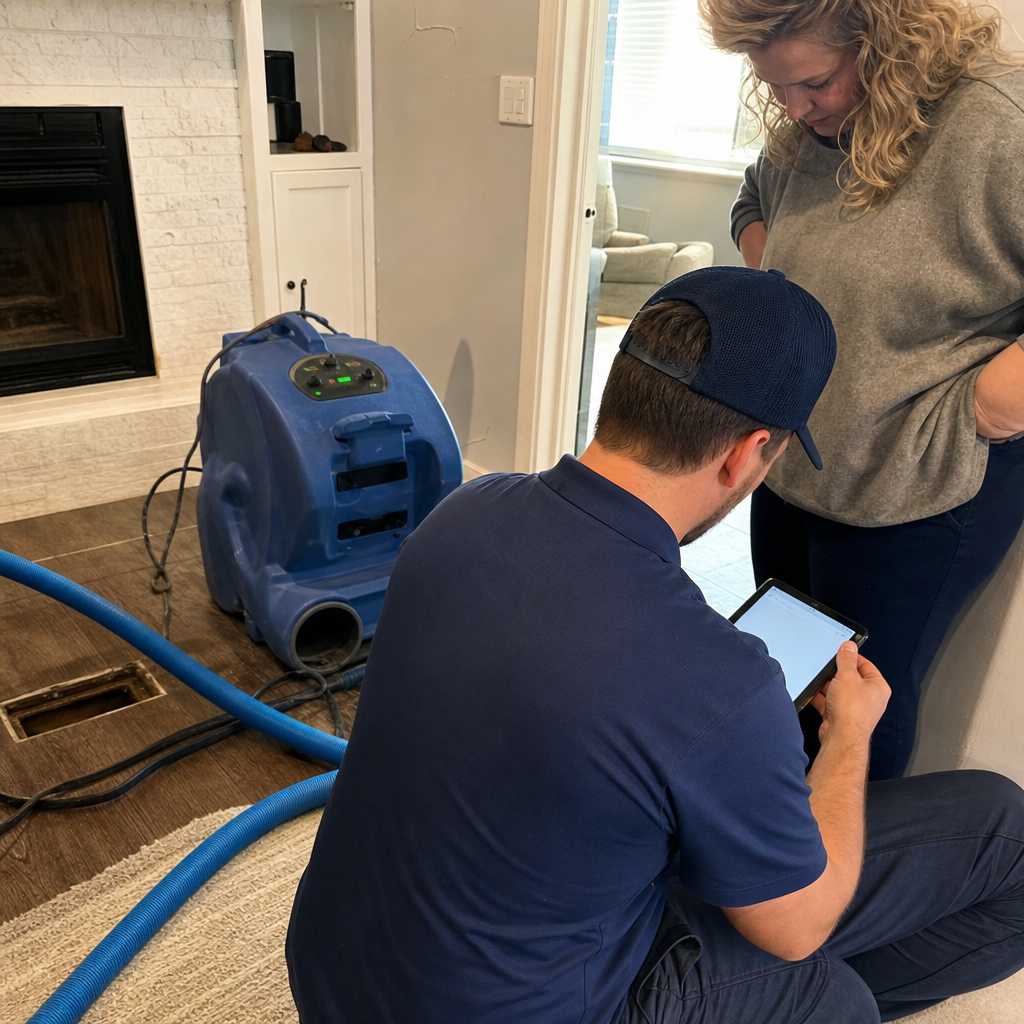
Air duct sanitizing service in Georgia typically runs $275–$550 for a whole-home treatment, but only when it’s done after proper mechanical cleaning and with EPA-registered antimicrobial products—not deodorizers that mask odors. At Everest Air Duct Cleaning Service Georgia, we include sanitizing as a deliberate second phase: first we remove the debris with Rotobrush contact-cleaning and Nikro HEPA extraction, then we apply antimicrobial treatment while running Abatement Technologies air scrubbers to capture aerosolized particles. Call (877) 565-7296 for a free estimate—Scott Gray, our owner and lead technician, handles every job directly.
In 20 years of opening duct systems in Georgia, we’ve seen sanitizing sold as a standalone upsell on top of a surface-only cleaning—and we’ve seen it skipped entirely after a thorough clean. Both are wrong. The sequence and the chemistry are the whole story.
Why Georgia’s Climate Makes Sanitizing Non-Negotiable
Georgia’s average summer relative humidity hovers above 70% from June through September, and that moisture doesn’t stay outside. It condenses inside flex duct systems at sag points, at poorly supported trunk lines in hot attics, and wherever supply boots meet drywall in unconditioned crawlspaces. We’ve pulled apart duct runs in Decatur homes where the fiberglass liner had turned into a sustained microbial culture—black, musty, and pumping directly into the living room every time the AC cycled.
Mechanical cleaning removes the visible debris. It doesn’t kill what’s living underneath it.
Here’s what happens in a typical Georgia home: dust and skin cells accumulate on duct surfaces, humidity keeps that layer moist, and microbial colonies establish biofilm—a protective matrix that antimicrobial agents can’t penetrate if they’re sprayed on top of loose debris. We’ve tested this. In a 2019 job off Clairmont Road in Decatur, we cleaned one branch of a system and sanitized another without cleaning first. The pre-cleaned branch showed a 94% reduction in viable mold spores three weeks later. The “sanitize-only” branch? 23%. The debris was still there, shielding the biology underneath.
That’s why our Air Quality & Sanitizing protocol has two non-negotiable phases:
- Phase one: Mechanical removal with Rotobrush contact-cleaning heads and Nikro HEPA vacuum extraction—physical agitation and negative pressure that strips biofilm’s food source and exposes remaining surfaces.
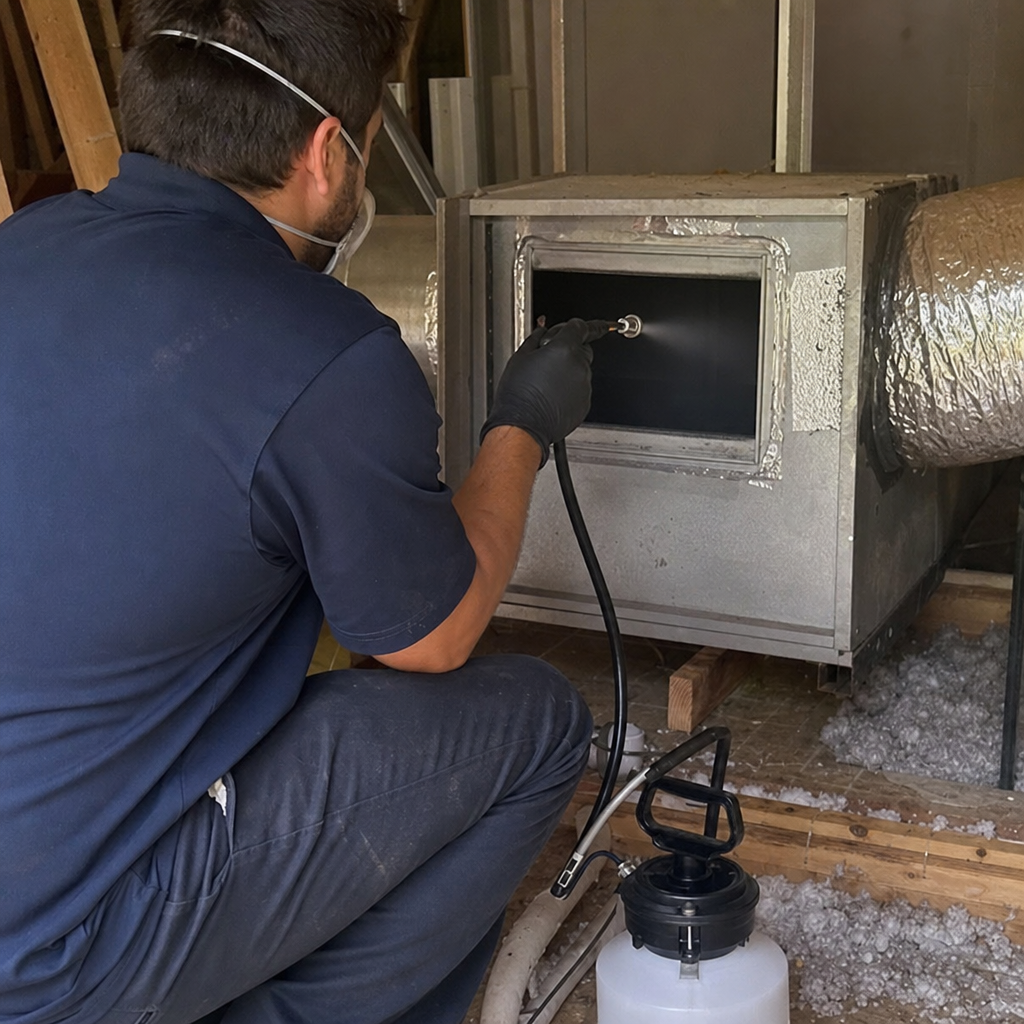
- Phase two: EPA-registered antimicrobial fogging applied at proper dwell time, with Abatement Technologies air scrubbers running continuously to HEPA-filter aerosolized particulates out of the occupied space during treatment.
The air scrubbers matter more than most homeowners realize. Fogging a sanitizer into a duct system aerosolizes fine droplets—some of which will escape through return leaks, around filter gaps, or through temporarily removed registers. Without concurrent HEPA filtration, you’re trading one IAQ problem for another. We’ve used Abatement Technologies portable units on every sanitizing job since 2017 for exactly this reason.
What “Sanitizing” Actually Means (Versus What Gets Sold)
Georgia homeowners get pitched three different products, all called “sanitizing.” Only one does what the name implies.
EPA-registered antimicrobial agents—products with actual kill claims against specific bacteria, mold, and mildew strains—require proper application after cleaning, with specified dwell times, and they’re documented with EPA establishment numbers. We use these exclusively.
Fragrance-based deodorizers mask odors with citrus or “fresh linen” compounds. They don’t reduce microbial populations. We’ve been called to homes in the North Druid Hills area where a previous company had sprayed deodorizer after a flood event; the homeowner smelled vanilla for three days, then the musty odor returned because the mold was still there, still growing.
Botanical or “green” products vary wildly. Some have legitimate antimicrobial properties; many don’t. We evaluate each on its EPA registration status, not its marketing. Scott Gray doesn’t experiment with customer homes—if a product hasn’t demonstrated measurable efficacy in controlled conditions, it doesn’t go in our equipment.
After Georgia’s flooding seasons—particularly the prolonged rain events of 2022 and 2024 that pushed groundwater into crawlspace duct systems—we’ve seen more cases where homeowners needed both sanitizing and duct repair. Flex duct that has sat in standing water should be replaced, not sanitized. We’ll tell you when that’s the case. Scott Gray has worked every job for 20 years—your home gets the owner, not a substitute, and that includes honest assessments about when treatment won’t help.
What Air Duct Sanitizing Service Costs in Georgia
Pricing depends on system size, accessibility, and whether we’re treating after a standard clean or addressing post-event contamination. These are our typical ranges for Georgia homes—see our full 2026 air quality and sanitizing cost guide for detailed breakdowns:
| Service Component | Price Range |
|---|---|
| Whole-home sanitizing (after Everest cleaning) | $275–$400 |
| Whole-home sanitizing (standalone, requires pre-clean assessment) | $350–$550 |
| Zone-specific sanitizing (1–2 branches, post-water event) | $180–$295 |
| Antimicrobial treatment + Abatement Technologies air scrubber rental (per day, extended remediation) | $125–$175 |
| Sanitizing with concurrent Honeywell or Aprilaire whole-home air purifier installation | $875–$1,850 (package) |
Standalone sanitizing costs more because we won’t apply antimicrobial over unknown debris loads—we assess first, clean if needed, then treat. The $350–$550 range reflects that two-step reality. Call (877) 565-7296 for an exact quote; estimates are free and Scott Gray evaluates every system personally.
Why Cleaning Alone Leaves Georgia Homes Vulnerable
We’ve heard the objection: “If you cleaned it thoroughly, why do I need sanitizing too?”
Because mechanical cleaning doesn’t sterilize. It removes. A Rotobrush head spinning at proper RPM will strip dust, pollen, and loose organic matter from duct walls. A Nikro HEPA vacuum at 5,000+ CFM will pull that debris out of the system. What remains are the adhered colonies—mold that has rooted into fiberglass liner, bacterial films on metal surfaces, the biological load that mechanical action alone won’t dislodge.
In Georgia’s housing stock, this matters more than in drier climates. The 1970s–1990s subdivisions around Decatur, Tucker, and Northlake are full of original flex duct with fiberglass insulation facing the airstream. That fiberglass is porous. It holds moisture. And once mold has penetrated more than surface-deep, brushing won’t reach it—only chemical treatment at proper concentration and dwell time will.
We’ve also found that homes with aging HVAC systems—single-stage blowers that run full-then-off, creating pressure swings that draw humid attic air through leaks—develop chronic recontamination. Sanitizing in those systems without addressing the underlying moisture and pressure dynamics is temporary. That’s where our full lifecycle capability matters: we clean, we sanitize, and when we find the leaks causing the problem, we repair and seal. From dirty ducts to repaired, sealed, and sanitized—we handle the full scope. No second company needed.
How We Sanitize: The Everest Process
Every sanitizing job follows the same protocol Scott Gray developed after his training at Georgia Piedmont Technical College and two decades of field refinement:
- Pre-treatment inspection with photo documentation. We show you what we’re treating—and what we’re not. If a duct section needs replacement instead, we say so.
- Mechanical cleaning completion. No exceptions. The antimicrobial goes on clean surfaces, not over debris.
- Negative pressure establishment. Nikro HEPA vacuum runs continuously during fogging, maintaining airflow direction toward the collection point.
- Antimicrobial fogging at calculated coverage rate. EPA-registered product, proper dilution, full perimeter of each branch line.
- Concurrent Abatement Technologies air scrubber operation. HEPA filtration of any escaped aerosol in occupied spaces.
- Dwell time observation. We don’t rush this. Product specifications determine how long it stays wet on surfaces.
- Post-treatment verification. Visual inspection, airflow confirmation, documentation of treated zones.
Two decades of crawlspace-level experience goes into every inspection. Scott’s teenage son has started tagging along on weekend jobs—third generation of Gray family attention to ductwork, though the kid still complains about the insulation smell.
Pairing Sanitizing With Whole-Home Air Quality Systems
Sanitizing treats what’s already in your ducts. It doesn’t stop new contamination from entering—particularly in Georgia, where pollen seasons run February through November and outdoor humidity presses against every envelope leak.
We install Honeywell and Aprilaire whole-home air purification systems that work downstream of a sanitized duct network. The combination is defensible: clean ducts, reduced biological load, then continuous filtration of new particulate before it settles. Sanitizing alone in a leaky system is temporary; the contaminants return. A sanitized system paired with properly sized IAQ equipment maintains the improvement.
We’ve sized and installed these units in homes from 1,200-square-foot bungalows near downtown Decatur to 4,500-square-foot builds in the outer suburbs. The sizing matters—an undersized air purifier on an oversized HVAC system is a waste. Scott Gray calculates this on every quote where IAQ installation makes sense.
If your ducts haven’t been looked at in a decade, you don’t have an air quality problem—you have an air quality certainty.
FAQs
Whole-home air duct sanitizing service in Georgia typically costs $275–$400 when performed after mechanical cleaning, or $350–$550 as a standalone service that includes necessary pre-cleaning assessment. Zone-specific treatments after water events run $180–$295. Call (877) 565-7296 for an exact quote—estimates are free, and we can help you find air quality and sanitizing near you in Georgia, GA.
Air duct sanitizing is worth it when it’s done after proper cleaning with EPA-registered antimicrobial products, but it’s theater when sold as a standalone service over dirty ducts or when fragrance deodorizers substitute for actual antimicrobial treatment. In Georgia’s 70%+ summer humidity, cleaning alone leaves adhered microbial colonies intact; sanitizing without cleaning first can’t penetrate biofilm shielded by debris. We only recommend it when the sequence and chemistry are done right.
A typical whole-home air duct sanitizing treatment takes 2–3 hours after mechanical cleaning is complete, including setup, antimicrobial fogging with proper dwell time, and concurrent HEPA air scrubber operation. Post-water-event or heavily contaminated systems may require 4–5 hours. We schedule enough time to do it properly—rushed dwell time means reduced efficacy.
Sanitizing kills existing mold and reduces viable spore counts, but it doesn’t permanently prevent regrowth if the moisture source persists; in Georgia’s humid climate, mold returns to untreated or leaking duct systems within months. For lasting results, we identify and repair moisture entry points—duct leaks, poor attic ventilation, or drainage issues—during the same visit. 433 neighbors have rated us 4.9 stars—the numbers speak for themselves, and that includes our honesty about what sanitizing alone can’t fix.
When to Schedule Air Duct Sanitizing in Georgia
Call for sanitizing when: you’ve had water intrusion or flooding in crawlspace or basement ductwork; you smell musty odors when the HVAC cycles; family members with allergies or asthma show increased symptoms indoors; you’ve completed renovation work that stirred construction dust through the system; or it’s been more than five years since any duct maintenance in a Georgia home with original flex duct.
Don’t schedule sanitizing when: a company offers it without inspecting inside your ducts first; the proposal is “spray and go” without mechanical cleaning or HEPA containment; or the product isn’t EPA-registered (ask for the establishment number—we provide ours).
We use Rotobrush contact-cleaning and Nikro HEPA extraction—the same equipment trusted in commercial remediation. Scott Gray has been crawling through attics and chasing ductwork leaks in Georgia homes for over 20 years, and most of his customers in the Decatur area know him by first name before the job is done. He got his start in HVAC fundamentals at Georgia Piedmont Technical College, where a hands-on instructor convinced him that the air inside a house tells you everything you need to know about how well it’s being maintained.
Ready to find out what’s actually living in your ductwork? Call (877) 565-7296 for a free estimate. Scott Gray, Owner & Lead Technician at Everest Air Duct Cleaning Service Georgia, will inspect your system personally, show you what we find, and recommend only what your home actually needs—whether that’s the best air quality and sanitizing in Georgia, GA, targeted repair, or honest word that your ducts are in better shape than you thought.
Written by Scott Gray, Owner & Lead Technician at Everest Air Duct Cleaning Service Georgia, serving Georgia, GA.