
HVAC Duct Cleaning Service in Georgia: What a Dedicated Specialist Does Differently
Best HVAC Cleaning in Georgia, GA typically runs $350–$850 for a complete residential system, with same-week scheduling available for most homes in the metro area. Call (877) 565-7296 for a free, upfront estimate — Scott Gray, Owner & Lead Technician, handles every job personally with 20 years of hands-on experience and commercial-grade extraction equipment. If your ducts haven’t been looked at in a decade, you don’t have an air quality problem — you have an air quality certainty.
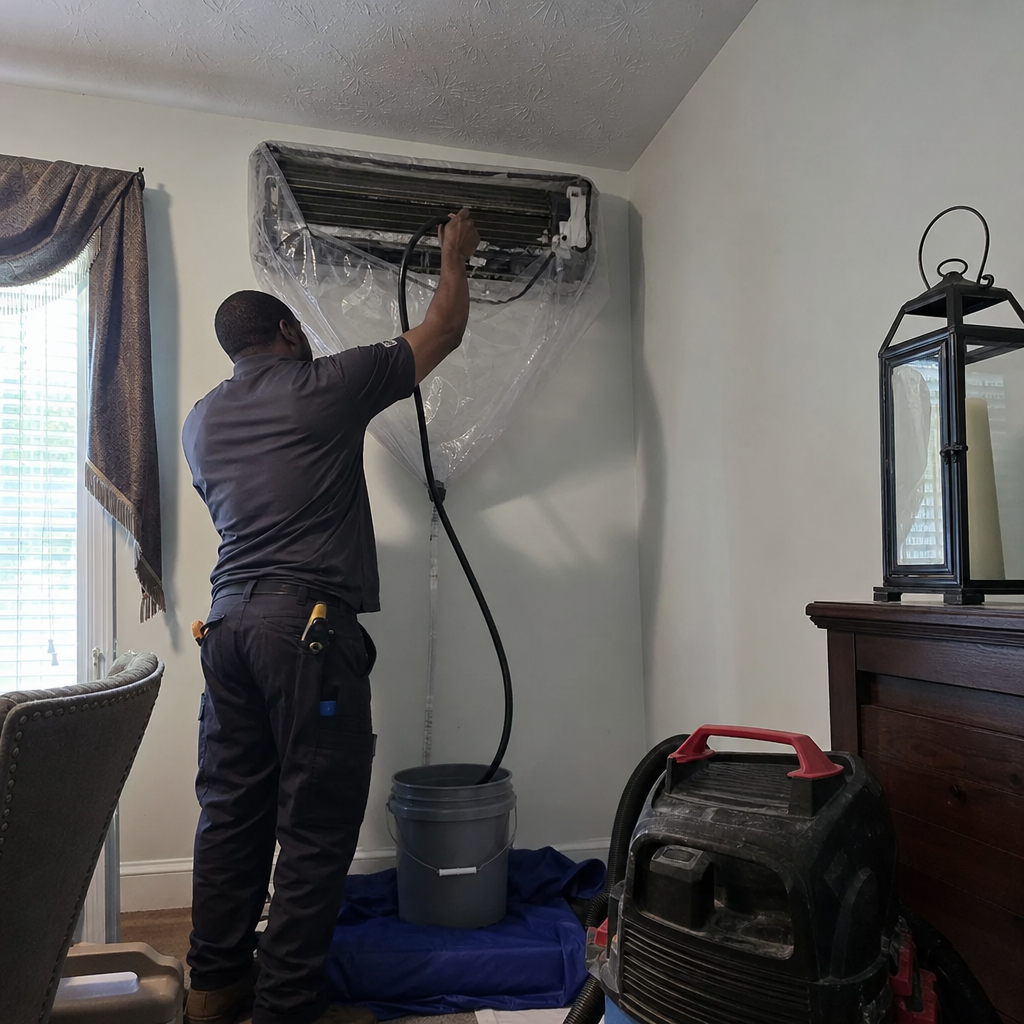
Georgia’s climate puts unique demands on ductwork. Our summers push 95°F with humidity that hangs in the 80s, forcing air conditioning systems to run eight months straight. Winters flip to gas furnace heating, often with heat pumps cycling through the same trunk lines. That dual-duty workload — cooling, dehumidifying, then heating — means Georgia ducts accumulate a distinct mix of pollen, mold-friendly moisture, and combustion particulates that single-season climates simply don’t see. We’ve pulled intact wasp nests from return plenums in Smyrna and black mold blooms from flex duct in 1980s Decatur ranch homes where the crawlspace breathed directly into the living space.
Why Equipment Choice Separates a Specialist From a Generalist
When an HVAC tech adds “duct cleaning” to a service call, they typically bring a portable shop vac and compressed air. We’ve seen the results: dust blown from one branch to another, debris knocked loose but never extracted, and homeowners who paid for a service that moved the problem around instead of removing it.
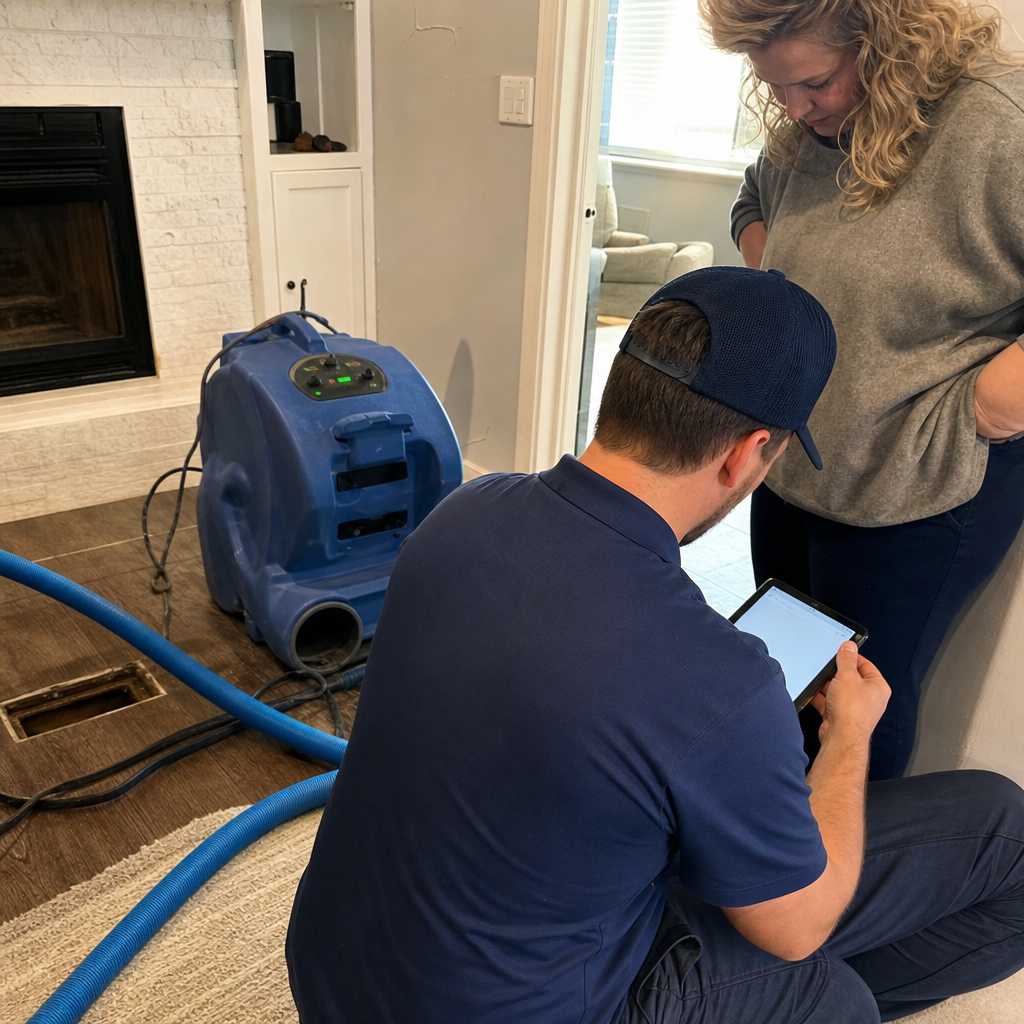
When duct cleaning is the only thing a company does, the equipment list looks completely different. At Everest, we run Rotobrush contact-cleaning systems — rotating brushes that physically scrub the interior duct walls, dislodging caked-on buildup that compressed air can’t touch. That debris feeds into Nikro HEPA negative-pressure vacuums, which maintain suction strong enough to pull particles down to 0.3 microns without letting them escape into your home. For homes with significant contamination or post-renovation dust, we deploy Abatement Technologies air scrubbers to establish negative pressure throughout the system, ensuring nothing migrates from the ductwork into occupied spaces during cleaning.
The difference isn’t marketing — it’s physics. Negative-pressure cleaning contains and extracts particulates rather than agitating them into the air your family breathes. In Georgia, where pollen counts regularly exceed 1,500 grains per cubic meter in spring and summer humidity sustains microbial growth, that containment matters more than it does in drier climates. We’ve had customers in the Stone Mountain area call us after a “blow-and-go” cleaning left their home dustier than when they started.
What Each Piece of Equipment Actually Does
- Rotobrush contact-cleaning: Rotating bristle assemblies navigate 90-degree elbows and branch connections, scrubbing biofilm and settled dust from duct walls rather than simply blowing past it
- Nikro HEPA negative-pressure vacuum: Creates suction at 2,000+ CFM at the trunk line, capturing dislodged debris before it can re-enter the airstream; HEPA filtration means captured particles stay captured
- Abatement Technologies air scrubbers: Standalone units that filter and recirculate air within the home during cleaning, maintaining negative pressure so no contaminated air escapes the work zone
What “Full Duct Lifecycle Service” Means — and Why Partial Work Fails
Most homeowners don’t realize that cleaning dirty ducts without inspecting for leaks, damage, or microbial growth leaves the job fundamentally incomplete. We’ve found this repeatedly in Georgia’s older housing stock: a thorough cleaning reveals disconnected flex duct in the attic, rodent-chewed insulation, or condensation stains indicating where warm humid air meets cool conditioned air and creates mold-friendly conditions.
Everest handles the full scope — HVAC cleaning, duct repair and sealing, sanitizing, and air quality product installation — so you’re not calling a second contractor to fix what the first one found but couldn’t address. Scott Gray has worked every job for 20 years; your home gets the owner, not a substitute. Two decades of crawlspace-level experience goes into every inspection.
Here’s what that lifecycle looks like in practice:
| Service Phase | What We Do | Typical Cost Range in Georgia |
|---|---|---|
| Initial inspection & assessment | Video scope of trunk lines, pressure testing for leaks, moisture detection | Included with service |
| Mechanical cleaning (full system) | Rotobrush contact-cleaning of all supply and return branches, trunk line extraction with Nikro HEPA vacuum | $350–$650 |
| Deep contamination / post-renovation | Negative-pressure containment with Abatement scrubbers, extended agitation cycles | $550–$850 |
| Duct sanitizing (Guardsman antimicrobial) | EPA-registered fogging applied after cleaning, targeted to microbial growth areas | $75–$150 |
| Duct repair & sealing | Mastic sealing of leaks, flex duct replacement, register boot reconnection | $150–$400 |
| Air quality product installation | Honeywell or Aprilaire whole-home purifiers, UV-C systems, upgraded filtration | $400–$1,200 |
Stopping at “cleaning only” means ignoring the conditions that made your ducts dirty in the first place. In Georgia’s mixed heating/cooling climate, where the same duct system serves double duty year-round, those conditions compound faster than homeowners expect.
Georgia’s Climate Reality: Why Duct Condition Matters More Here
Most of the country runs heating or cooling; Georgia runs both, often within the same week. That thermal cycling stresses duct seams and flex connections. Humidity swings — from 85% summer air outside to 50% conditioned air inside — create pressure differentials that pull unconditioned attic or crawlspace air through every leak point.
We’ve mapped this in real homes. A typical 2,000-square-foot Georgia ranch with 15% duct leakage is effectively conditioning its attic half the year. The energy waste is obvious; less obvious is what that leakage brings into the system: fiberglass particles from deteriorating duct board, rodent droppings from accessible crawlspaces, and the pollen load that makes Georgia’s spring allergy season notorious. Scott Gray got his start in HVAC fundamentals at Georgia Piedmont Technical College, where a hands-on instructor convinced him that the air inside a house tells you everything you need to know about how well it’s being maintained. That observation has held up across two decades of Georgia attics.
Specific local factors we account for on every Georgia job:
- Pollen infiltration: Georgia’s oak, pine, and ragweed pollen seasons overlap from February through November; leaky return ducts pull this directly into the system
- Crawlspace humidity: Many metro-area homes built 1960–1990 have unsealed crawlspaces that communicate with ductwork through floor penetrations
- Furnace-AC combination systems: Gas combustion particulates and cooling coil condensation create distinct contamination profiles in the same trunk lines
- Older neighborhood housing stock: Decatur, Avondale Estates, and parts of Smyrna have significant pre-1980 construction with original duct board or uninsulated flex that degrades differently than modern materials
How to Evaluate Any HVAC Duct Cleaning Service in Georgia
Homeowners researching before they call — which describes most of our customers — should ask specific questions that separate actual specialists from add-on providers. Here’s what we’ve learned matters after 433 verified reviews averaging 4.9 stars across Georgia homes.
Do they show you the inside of your ducts first?
A technician who can’t or won’t video-scope your trunk lines before quoting is working blind. We inspect first, every time. The camera doesn’t lie, and it lets us show you exactly why a cleaning will help — or, occasionally, why it won’t. Scott built his reputation on honest assessments; he’ll tell you when a cleaning will genuinely help and when it won’t, which is apparently a rarer thing than it should be.
What extraction method do they use?
“Compressed air” or “high-pressure blowout” without contained negative-pressure extraction is redistribution, not removal. Ask specifically: does their equipment create negative pressure at the trunk line during agitation? If they hesitate or describe a shop vac on wheels, you’re not getting commercial-grade extraction.
Can they fix what they find?
Disconnected duct, failed seams, or active microbial growth require repair and sealing — not just cleaning. A generalist HVAC company may clean and leave, forcing you to coordinate a second contractor. Everest handles cleaning, repair, sealing, and sanitizing in one workflow. From dirty ducts to repaired, sealed, and sanitized — we handle the full scope.
Who actually shows up?
Franchise operations dispatch whoever’s available. At Everest, Scott Gray has worked every job for 20 years — your home gets the owner, not a substitute. His wife finally stopped asking why he comes home smelling like insulation, and his teenage son has already started tagging along on weekend jobs. 433 neighbors have rated us 4.9 stars — the numbers speak for themselves.
FAQs
Affordable HVAC Cleaning in Georgia, GA typically costs $350–$650 for standard mechanical cleaning, with post-renovation or heavily contaminated systems running $550–$850. Duct repair, sealing, or sanitizing add $75–$400 depending on scope. Call (877) 565-7296 for an exact quote — estimates are free, and we inspect before we price.
Repair and sealing is almost always more cost-effective than full replacement for isolated leaks, disconnected boots, or localized flex duct damage typical in Georgia homes. We replace only when duct board is crumbling, insulation is saturated, or metal trunk lines are corroded — conditions we identify during our pre-cleaning inspection. Most repair and sealing work runs $150–$400 versus $2,000+ for full system replacement, making it worth understanding Furnace Duct Cleaning Cost in Georgia, GA in context.
We typically schedule within 3–5 business days for standard requests, with emergency slots available for post-renovation dust or active respiratory concerns. Same-week service is often possible in the metro Georgia area. Call (877) 565-7296 to check current availability — we’ll confirm a specific date and arrival window when you book.
Visible dust blasting from registers when the system cycles, musty odors that intensify when HVAC runs, or allergy symptoms that worsen at home are reliable indicators. Age alone doesn’t determine need — we’ve seen 30-year-old duct systems that were simply dirty and 10-year-old systems with significant leakage and contamination. Our video inspection shows you exactly what condition your ducts are in before you commit to any service.
Ready to Get Your Georgia Home’s Ductwork Properly Cleaned?
Call (877) 565-7296 to schedule your free inspection and upfront estimate. Scott Gray, Owner & Lead Technician at Everest Air Duct Cleaning Service Georgia, will handle your job personally — with 20 years of experience, professional Rotobrush and Nikro equipment, and the repair capability to fix what we find. No franchise crews, no bait-and-switch pricing, and no leaving problems for you to solve with a second company.
Written by Scott Gray, Owner & Lead Technician at Everest Air Duct Cleaning Service Georgia, serving Georgia, GA.