
Last updated July 11, 2026
Air Duct Cleaning Maintenance Checklist for Atlanta Homeowners
Most duct cleaning checklists tell you to change your filter every 90 days. That advice ignores the fact that an Atlanta home during April oak pollen season can load a MERV-8 filter to capacity in under three weeks. After 20 years crawling through attics in Buckhead, Decatur, and Sandy Springs, we’ve learned that effective duct maintenance in this city isn’t about calendar reminders—it’s about reading environmental triggers and knowing what to look for before your system starts circulating problems. This guide gives you a trigger-based checklist built specifically for Atlanta’s climate patterns, from pollen bombs to post-storm humidity spikes, plus the exact visual inspection points that tell you when to act versus when to wait.
Quick Answer
A proper air duct cleaning maintenance checklist for Atlanta homeowners should include quarterly filter inspections timed to pollen season (March–May), biannual visual checks of supply registers and flex duct runs for debris or sagging, annual condensate pan and drain line cleaning before July humidity peaks, and immediate professional assessment if you spot visible mold at registers or measure airflow drop below 80% of design capacity. Post-renovation homes in Atlanta’s active rehab market need additional duct inspection within 30 days of drywall or insulation work completion.
Table of Contents
- Atlanta’s Four-Season Trigger System
- Visual Inspection Points Homeowners Can Check
- Building Your Home-Specific Cleaning Log
- Post-Renovation Checklist for Atlanta Rehabs
- Filter Selection and Maintenance for Local Conditions
- Humidity, Mold, and Condensate Management
- When Maintenance Crosses to Professional Intervention
Atlanta’s Four-Season Trigger System
Generic checklists fail in Atlanta because they don’t account for our distinct environmental pulses. We’ve developed a trigger-based system tied to what actually happens in this climate zone—USDA Hardiness Zone 8a, with pollen counts that regularly exceed 4,000 grains per cubic meter and summer dew points that hover near 70°F.
Spring: Oak Pollen Season (March through May)
This is our highest-load period. Oak, pine, and birch pollen coat outdoor coils, infiltrate through fresh-air intakes, and load filters faster than any other season. In our work across Druid Hills and Virginia-Highland, we’ve pulled filters during late April that were completely occluded after 18 days.
- Check filter every 14 days, not monthly. Hold it to light—if you can’t see through it, it’s done.
- Inspect outdoor condenser coils for yellow-green pollen matting; rinse with low-pressure water if visible.
- Run system on “recirculate” during peak pollen alerts (WABE and Atlanta Allergy & Asthma post daily counts).
- Schedule supply register wipe-down with damp microfiber—pollen settles on louvers and re-enters airflow.
Summer: Humidity Peak (June through September)
Atlanta’s July average relative humidity hits 75%, and attic temperatures exceed 130°F. This combination creates ideal conditions for microbial growth in duct interiors and condensate systems.
- Inspect condensate drain pan monthly—standing water for 48+ hours indicates drain line blockage or improper slope.
- Check flex duct runs in attic for condensation on exterior; wet insulation means cold-air leakage at seams.
- Monitor indoor humidity with calibrated hygrometer; sustained readings above 60% warrant dehumidifier assessment.
- Schedule professional evaporator coil cleaning if you detect musty startup odors—biofilm forms quickly in this window.
Fall: Wildfire Smoke and Leaf Mold (October through November)
Western wildfire smoke now routinely reaches Atlanta at ground level during autumn inversions. The 2023 and 2024 seasons brought multiple AQI exceedance days. Simultaneously, decaying leaf litter generates mold spores that enter soffit vents and fresh-air intakes.
- Upgrade to MERV-13 minimum during smoke events—standard MERV-8 captures less than 50% of PM2.5.
- Inspect and clear soffit vents of leaf accumulation; we’ve found complete blockages in Grant Park and East Atlanta homes.
- Run bathroom and kitchen exhaust fans 30 minutes after cooking to reduce interior particle load.
- Schedule duct inspection if AQI exceeded 100 for 3+ consecutive days—fine particulate embeds in duct lining.
Winter: Heating Startup (December through February)
Atlanta’s heating degree days are moderate, but startup after 6+ months of dormancy dislodges accumulated dust and can reveal heat-exchanger issues.
- Replace filter before first heating cycle—summer debris has been sitting since October.
- Run system for 2 hours with windows cracked to purge initial burn-off odors; persistent metallic smells indicate professional needed.
- Inspect visible duct runs in basement or crawlspace for rodent activity—winter drives pests to warm ductwork.
- Verify carbon monoxide detector function on every level; cracked heat exchangers are rare but lethal.
Visual Inspection Points Homeowners Can Check
After two decades in Atlanta attics, we’ve identified three inspection points that reveal system condition without tools—each tells a specific story about what’s happening inside your ducts.
Supply Register Debris Color
Remove a supply register cover and examine the debris pattern on the back surface and immediate duct interior. The color indicates source:
- Gray, fibrous dust: Normal accumulation—filter doing its job, but change interval may be stretched.
- Black, sooty film: Possible duct leakage pulling attic or crawlspace air; common in 1980s–1990s Atlanta subdivisions with original flex duct.
- Green, brown, or pink staining: Microbial growth—requires professional assessment, not DIY cleaning.
- White, powdery residue: Drywall or insulation dust; strong indicator of recent construction impact or duct penetration.
In our Air Duct Cleaning in Atlanta work, we see black film most frequently in homes near I-285 perimeter where older construction meets heavy traffic particulate infiltration through envelope gaps.
Flex Duct Sag Points
Atlanta’s housing stock includes massive flex duct installations from the 1990s–2000s building boom. Flex duct should maintain gradual, supported curves. Sagging creates low-velocity zones where debris settles and moisture pools.
From attic access (safely, with proper footing and lighting), trace visible runs for:
- Dips below horizontal: Every inch of sag reduces airflow and creates condensation risk.
- Compression at truss chases: Common where builders squeezed 10-inch duct through 8-inch gaps.
- Disconnected collar at plenum: Blows conditioned air into attic—we’ve measured 15–20% system losses from single disconnections.
Condensate Drain Pan Condition
Locate your indoor air handler (typically attic, basement, or closet). The secondary drain pan beneath the unit should be dry in normal operation. Water here means primary drain blockage—Atlanta’s humidity makes this a summer certainty without maintenance.
Check for rust, algae staining, or standing water. Pour a cup of water into the primary drain line access; it should flow freely to exterior termination. Slow drainage indicates partial blockage that will back up during peak load.
Building Your Home-Specific Cleaning Log
Generic “every 3–5 years” duct cleaning advice ignores that your home’s particle load is unique. We’ve built a logging system for Atlanta homeowners that correlates filter changes with local air quality to establish your actual interval—not an industry average.
The Log Format
Create a simple spreadsheet or notebook entry with these columns:
- Date of filter change
- Filter MERV rating and brand
- Days until visible loading (hold-to-light test failure)
- Atlanta AQI average for that period (AirNow.gov historical data)
- Pollen count peak during interval (Atlanta Allergy & Asthma monthly reports)
- Any interior events: renovation, new pet, wildfire smoke days
Pattern Recognition
After 12 months of logging, you’ll see your home’s signature. A Buckhead homeowner near Peachtree Road with heavy traffic exposure and original windows might log 21-day filter life during pollen season. A newer Midtown high-rise with tight envelope and no fresh-air intake might stretch to 90 days consistently.
When filter life drops 30% below your established baseline without explanatory event, investigate: duct leakage has likely increased, or an interior source (new offgassing furniture, hidden mold reservoir) has emerged.
We’ve applied this logging approach across hundreds of Everest Air Duct Cleaning Service Georgia home visits, and homeowners who maintain it call us 40% less often for reactive problems—they see issues coming.
Post-Renovation Checklist for Atlanta Rehabs
Atlanta’s intown neighborhoods—Old Fourth Ward, Reynoldstown, West End—have seen extraordinary renovation velocity. Drywall sanding, insulation installation, and hardwood refinishing generate massive particulate loads that standard contractor cleanup misses. We’ve opened ducts in recently “finished” rehabs that contained half-inch of drywall compound dust.
The 30-Day Post-Renovation Protocol
- Replace all filters immediately upon move-in—contractor HVAC operation has loaded them with construction dust.
- Remove and inspect three supply registers in different zones: kitchen/living area, master bedroom, farthest room from air handler. Compare debris color to the reference guide above.
- Run system continuously for 72 hours with new MERV-11+ filter to capture suspended particulate before it settles in duct lining.
- Schedule professional duct inspection within 30 days if any register shows white powdery residue or if you detect persistent “construction smell” on startup after the 72-hour purge.
- Verify return air pathway integrity: Renovations often relocate walls that contain return chases; blocked returns starve the system and increase duct leakage elsewhere.
For homes built before 1978 in Atlanta’s historic districts, add lead-safe verification to this checklist. Disturbance of painted surfaces during renovation can introduce lead particulate to ducts; standard cleaning won’t address this—HEPA extraction and Abatement Technologies air scrubbing are required.
Filter Selection and Maintenance for Local Conditions
Filter choice in Atlanta isn’t about buying the highest MERV rating. It’s about matching resistance to your system’s blower capacity while capturing the specific particulate our climate generates.
MERV Guidance by Season and System
| Season/Condition | Minimum MERV | System Consideration |
|---|---|---|
| Standard operation (no alerts) | 8–11 | Compatible with all residential blowers |
| Pollen season (Mar–May) | 11 | Check static pressure if upgrade from MERV-8 |
| Wildfire smoke events | 13 | Requires blower rated for higher resistance; monitor for reduced airflow |
| Post-renovation | 11 | Change every 2 weeks until loading stabilizes |
| Allergy sufferer household | 13 | Consider Aprilaire whole-home media cleaner with 4-inch pleat depth |
We’ve installed Honeywell and Aprilaire whole-home filtration systems for Atlanta clients whose health needs exceed what 1-inch pleated filters can deliver. The 4-inch media depth extends change intervals to 6–12 months even under high load, and the larger surface area reduces system resistance compared to high-MERV 1-inch filters.
Critical maintenance point: never run system without filter, even briefly. The blower pulls unfiltered air directly into evaporator coils and ductwork; we’ve cleaned coils caked with years of accumulated hair and fiber from filter gaps or missing filters.
Humidity, Mold, and Condensate Management
Atlanta’s summer dew point averages 68–72°F, meaning condensation forms on any surface below that temperature. In duct systems, this creates two risk zones: exterior condensation on cold-air ducts in hot attics, and interior biofilm growth on evaporator coils and drain pans.
Attic Duct Condensation
When 55°F supply air runs through 130°F attic flex duct with compromised insulation, exterior sweating soaks surrounding insulation and degrades ceiling drywall below. We’ve replaced thousands of feet of water-damaged flex in Atlanta’s ranch-style homes where original R-6 insulation has compressed to R-2 effective value.
Homeowner check: during July afternoon peak, touch exposed flex duct in attic (safely, briefly). Cold and dry is correct. Cold and damp indicates insulation failure. Ambient temperature means complete air loss at disconnection.
Evaporator Coil Biofilm
The dark, wet environment of a cooling coil grows bacterial and fungal biofilm that releases musty odors on startup and reduces heat transfer efficiency. Annual professional cleaning with foaming cleaner and mechanical brushing is standard maintenance; between cleanings, homeowners can:
- Ensure condensate drain flows freely (pour water test monthly in summer)
- Run fan-only mode for 10 minutes after cooling cycle to dry coil surface
- Maintain indoor humidity below 60% with standalone or whole-home dehumidification
For homes with persistent mold sensitivity, we offer duct sanitizing with EPA-registered products applied through commercial fogging equipment—not the consumer-grade “bombs” that leave residue and don’t penetrate duct runs.
When Maintenance Crosses to Professional Intervention
There’s a clear threshold where homeowner maintenance ends and professional service becomes necessary. We’ve defined it through two decades of HVAC Cleaning in Atlanta calls—many of which could have been avoided if homeowners had recognized the crossing point earlier.
Finding One: Visible Mold at Registers
Any mold growth visible on supply register surfaces or immediate duct interior indicates systemic conditions favorable to growth throughout the system. Surface cleaning won’t address root cause—typically excessive humidity, duct leakage, or contaminated insulation. Professional assessment determines whether cleaning, sealing, or component replacement is appropriate.
Finding Two: Measured Airflow Drop
If you have an anemometer or can borrow one from a hardware store, measure airflow at a central supply register with blower on high. Compare to register rating (typically stamped on edge). Sustained readings below 80% of rated flow indicate:
- Significant duct leakage (common in Atlanta’s aging flex duct installations)
- Filter loading beyond visible inspection (internal pleat collapse)
- Evaporator coil restriction from biofilm or debris bypass
- Blower motor degradation
Scott Gray has worked every job for 20 years—your home gets the owner, not a substitute. When these thresholds appear, Everest Air Duct Cleaning Service Georgia home assessment provides definitive diagnosis and correction. We offer free estimates in Atlanta—call (877) 565-7296.
Common Mistakes to Avoid
- Ignoring the “new home” duct condition. Atlanta’s rapid construction in subdivisions like West Midtown and the BeltLine corridor often leaves ducts loaded with construction debris before occupancy. Request pre-closing duct inspection; we’ve found 2-inch drywall compound deposits in “move-in ready” homes.
- Using scented filters or duct sprays. These mask problems rather than solve them. Chemical fragrances can trigger respiratory sensitivity, and any odor strong enough to notice indicates an underlying condition requiring actual correction.
- Sealing registers in unused rooms. Atlanta homeowners trying to “save energy” by closing vents in guest rooms create pressure imbalances that increase duct leakage and blower strain. Modern systems are designed for balanced flow; partial closure is acceptable, complete sealing is not.
- Neglecting dryer vent maintenance alongside duct cleaning. The same lint that loads dryer ducts circulates through HVAC returns in homes with laundry rooms near return air pathways. Our Dryer Vent Cleaning in Atlanta service frequently reveals this connection.
- Waiting for “duct cleaning” before addressing obvious leakage. Cleaning dirty ducts with significant leakage is temporary—new attic air infiltrates immediately. Seal first, clean second; we handle both in sequence.
- Assuming new construction means clean ducts. Atlanta’s building boom has compressed schedules; we’ve cleaned ducts in 6-month-old homes where subcontractors used HVAC system as construction ventilation during finishing work.
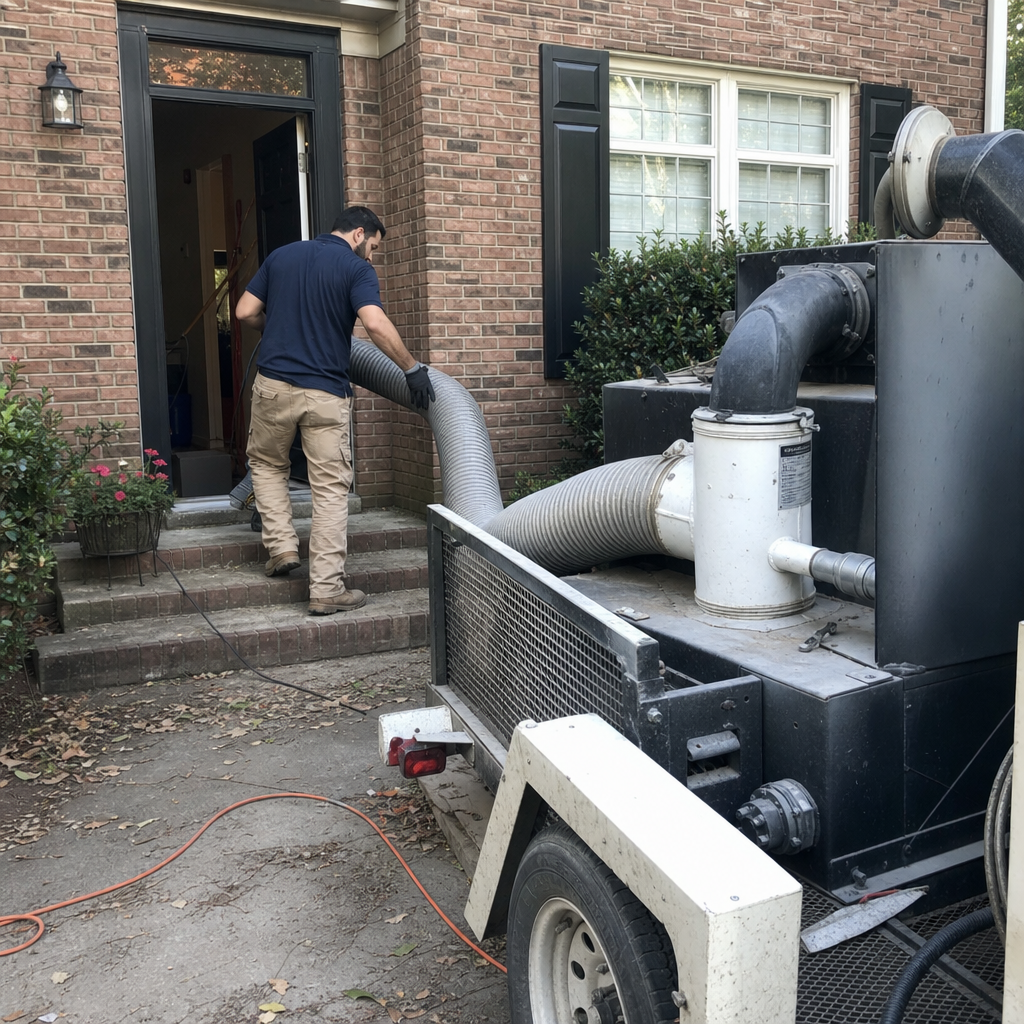
- Using consumer-grade “duct cleaning” attachments on shop vacuums. These disturb surface debris without extraction, often making indoor air quality worse by re-entraining settled particulate. Professional equipment (our Rotobrush contact-cleaning systems and Nikro HEPA vacuums) provides negative pressure containment and mechanical agitation that actually removes debris.
When to Call a Professional
Call for professional assessment when: visible mold appears at any register; measured airflow drops below 80% of design; persistent musty odors return within 48 hours of filter change; condensate pan overflows or drain line backs up repeatedly; post-renovation debris is visible in ducts; or your maintenance log shows filter life declining 30% or more without explanatory cause.
Two decades of crawlspace-level experience goes into every inspection we perform. From dirty ducts to repaired, sealed, and sanitized—we handle the full scope. Everest Air Duct Cleaning Service Georgia offers free estimates in Atlanta—call (877) 565-7296.
Frequently Asked Questions
Most Atlanta homes benefit from professional duct cleaning every 3–5 years, but your actual interval depends on environmental triggers and home-specific factors. Homes with allergy sufferers, multiple pets, or proximity to high-traffic corridors like I-75 or I-85 may need 2–3 year intervals. Homes with recent renovation, visible mold, or measured airflow reduction need immediate assessment regardless of calendar. Call (877) 565-7296 for an exact quote—estimates are free.
Yes—significantly. Atlanta’s oak pollen season produces counts among the highest in the nation, and standard residential filtration captures only a portion of this load. Pollen that bypasses filters settles in duct lining, where it combines with humidity to form organic debris that supports microbial growth. We’ve extracted pounds of compacted pollen from ducts in Druid Hills and Virginia-Highland homes that had “routine” maintenance. During peak season, check filters every 14 days and consider upgrading to MERV-11 minimum.
Homeowners can and should perform the visual inspections and filter maintenance outlined in this checklist. However, comprehensive duct cleaning requires negative-pressure HEPA extraction and mechanical agitation equipment that contains debris rather than redistributing it. Consumer-grade shop vacuum attachments lack this containment and can worsen indoor air quality. For the safety of your system and respiratory health, professional cleaning with equipment like our Rotobrush contact-cleaning systems and Nikro HEPA vacuums is the appropriate choice for deep restoration.
Signs of duct leakage include: utility bills 20% or more above comparable homes; rooms that never reach set temperature; excessive dust accumulation despite frequent filter changes; and black, sooty debris on register backs (indicating attic or crawlspace air infiltration). A simple homeowner test: with system running, hold a smoke pencil or thin ribbon near duct joints in accessible areas—flutter indicates leakage. Professional duct leakage testing with calibrated fan and pressure sensors provides quantitative measurement; we perform this as part of our duct repair and sealing assessments.
Atlanta’s summer dew point averages 68–72°F, creating condensation on any duct surface below that temperature. When cold supply air runs through underinsulated attic flex duct, exterior sweating wets surrounding materials and can penetrate to interior surfaces. Simultaneously, evaporator coils and drain pans provide constant moisture for interior biofilm growth. The combination makes summer our peak season for mold-related calls. Maintaining indoor humidity below 60%, ensuring proper condensate drainage, and verifying duct insulation integrity are critical preventive measures.
Ideally, both—protect ducts during renovation with sealed registers, then clean after completion. In Atlanta’s active rehab market, we’ve found that even careful contractors generate extraordinary particulate loads. Drywall sanding alone can produce thousands of cubic feet of fine dust that overwhelms standard filtration. If pre-renovation protection wasn’t possible, implement the 30-day post-renovation protocol in this guide and schedule professional inspection within that window. We frequently find that “clean” rehabs in Old Fourth Ward and Reynoldstown still require significant duct restoration.
The Bottom Line
Effective duct maintenance in Atlanta responds to actual environmental conditions, not calendar averages. Build your home-specific log, execute seasonal trigger checks, perform the three visual inspections we outlined, and know the two definitive thresholds—visible mold and measured airflow drop—that demand professional intervention. The homeowners we see with the healthiest systems and lowest lifetime costs are those who treat maintenance as diagnostic discipline, not periodic chore. From dirty ducts to repaired, sealed, and sanitized—we handle the full scope. Call (877) 565-7296 for your free estimate.
Written by Scott Gray, Owner & Lead Technician at Everest Air Duct Cleaning Service Georgia, serving Atlanta since 2006.