
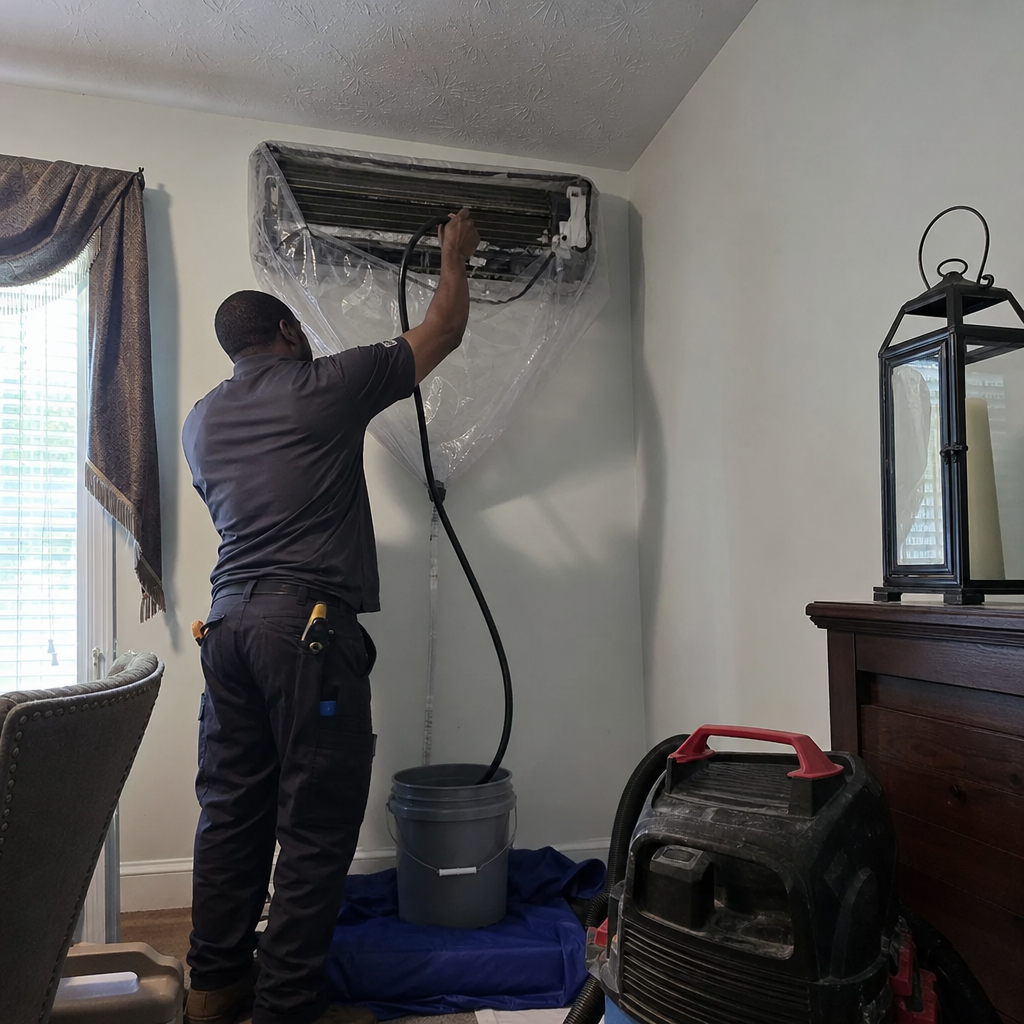
Fast, Reliable HVAC Cleaning Across Wilmington Island
HVAC cleaning in Wilmington Island typically runs $280–$650 for a full system service and is usually completed in a single visit. For most homes on the island, we recommend cleaning every 18–24 months — far sooner than the 3–5 year intervals that work for drier inland neighborhoods.
We’re Everest Air Duct Cleaning, and our HVAC Cleaning team knows Wilmington Island’s ductwork problems from twenty years of crawling through them. Scott Gray, our owner and lead technician, has worked attics and crawlspaces from Marsh Harbor Drive to the Bull River shoreline, and we’ve learned that this barrier island’s salt marsh environment turns routine maintenance into a genuine mechanical necessity. When your evaporator coil is choked with biofilm or your crawlspace ducts are weeping condensation, you don’t need a dispatcher — you need someone who’s pulled mud from a Wilmington Island trunk line before. Call (877) 565-7296 for a free estimate, and we’ll have Scott on your property, not a subcontractor you’ve never met.
Why Everest Air Duct Cleaning Service Georgia Is Wilmington Island’s Preferred HVAC Cleaning Company
433 neighbors across Georgia have rated us 4.9 stars — and a growing share of those reviews come from right here in 31410, where homeowners have learned to verify credentials before letting anyone into their crawlspace. We’re not a franchise crew dispatched from a Savannah call center; Scott Gray has worked every job for twenty years, and when you book with Everest, your home gets the owner, not a substitute.
Our response time to Wilmington Island is typically same-day or next-day, because we’re already working the coastal Chatham County corridor between Savannah and Tybee. That matters when you’re running your AC eleven months a year and the evaporator coil just froze over again.
We carry the equipment that commercial remediation crews trust: Rotobrush contact-cleaning systems, Nikro HEPA vacuums, and Abatement Technologies air scrubbers. More importantly, we know where to deploy them on Wilmington Island — which ranch homes on low-lying lots have pier-and-beam crawlspaces that never dry out, which split-foyer attics trap salt-laden air from the Wilmington River, and why a standard mainland cleaning protocol will miss the corrosion growing inside your galvanized trunk lines.
Our HVAC Cleaning Services in Wilmington Island
Evaporator Coil Cleaning
The evaporator coil in your Wilmington Island air handler is ground zero for the island’s humidity problems. Coastal Chatham County’s 80%+ relative humidity means condensate drains clog with biofilm faster here than almost anywhere else in the Savannah metro — and when that drain backs up, the coil pan overflows into your ductwork. We remove the coil assembly, clean it with foaming degreaser and low-pressure rinse, then treat it with an antibacterial solution that resists the mold recolonization that’s inevitable in this climate. For homes near the marsh on Wilmington Island’s eastern edge, we also inspect the drain line’s termination point — king-tide flooding can push salt water back into the line, corroding the fitting from the outside in.
Blower Cleaning
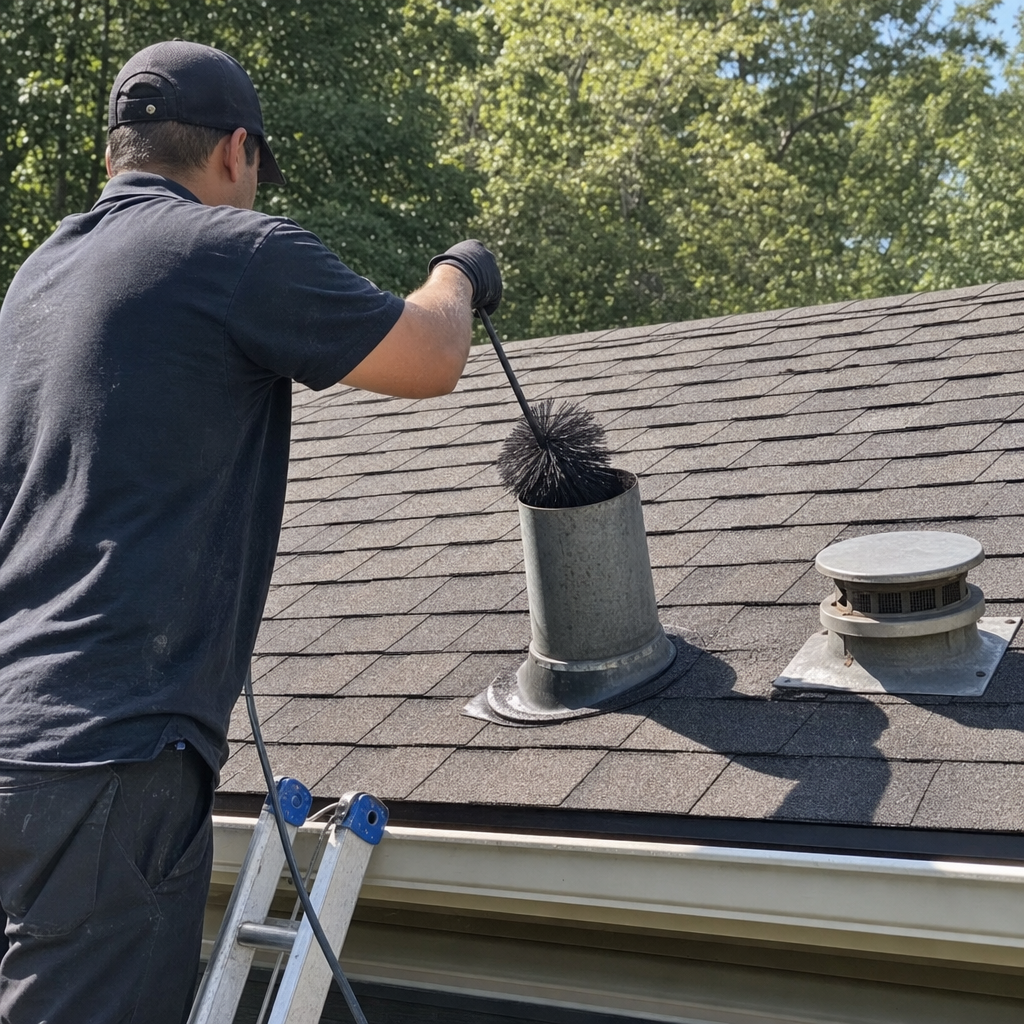
Your blower motor and wheel pull every cubic foot of air through the system, and on Wilmington Island that air carries salt particles, pollen from the marsh grasses, and the fine silt that gets kicked up during king-tide events. A dirty blower wheel loses 15–30% of its designed airflow, which means longer run times, higher humidity indoors, and premature motor failure. We remove the blower assembly, clean the wheel vanes with compressed air and contact brushes, and balance it before reinstallation. In older ranch homes on Wilmington Island with original ductwork, we often find the blower housing itself has corrosion pitting from years of salt-laden return air — something we document and discuss with you before it becomes a leak point.
Condenser Cleaning
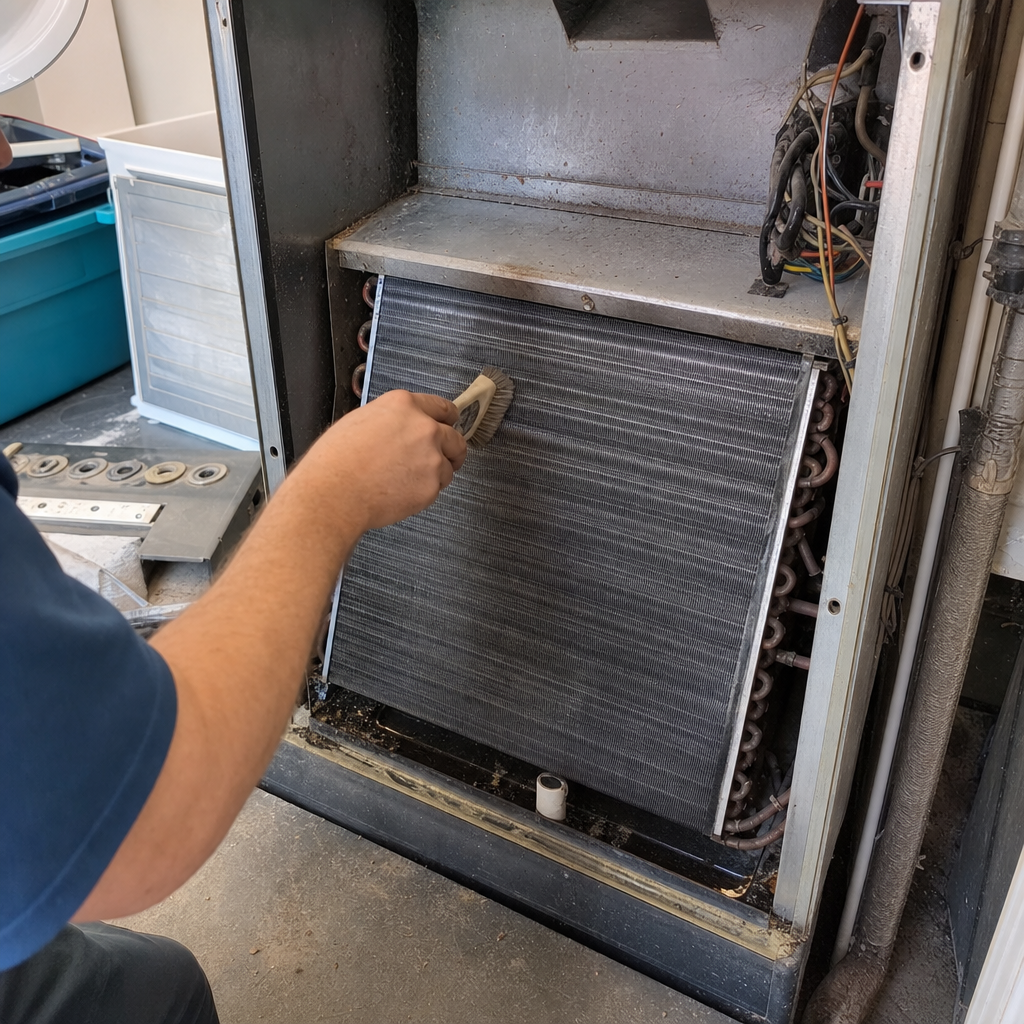
The outdoor condenser unit faces the full brunt of Wilmington Island’s coastal environment. Salt spray from the Bull River corrodes aluminum fins and copper tubing within 3–5 years, compared to the decade-plus lifespan you’d expect twenty miles inland. We pressure-wash the coil fins with foaming cleaner, straighten damaged fins for proper airflow, and inspect the refrigerant lines for pitting corrosion at the service valves. For homes on the island’s river-facing lots, we recommend more frequent condenser cleanings — every 12–18 months rather than the standard 2-year interval — because once the fins deteriorate past 50% surface area, you’re looking at a full replacement rather than a maintenance visit.
Air Handler Cleaning
The air handler cabinet is where all of Wilmington Island’s environmental stresses converge: humidity, salt, and the biological growth they combine to create. We clean the entire interior cabinet — drain pan, insulation lining, return plenum, and supply plenum — with HEPA-contained vacuuming and antimicrobial treatment. For homes with air handlers mounted in unconditioned attics (common in the 1970s and 1980s ranch stock that dominates Wilmington Island), we pay special attention to the cabinet seams and access panel gaskets. Salt-laden attic air infiltrates these gaps, corroding the heat exchanger on gas furnaces and degrading the insulation that keeps condensation from forming on the cabinet exterior. We’ve replaced too many air handlers on Wilmington Island that failed prematurely from this exact pattern.
Coil Treatment
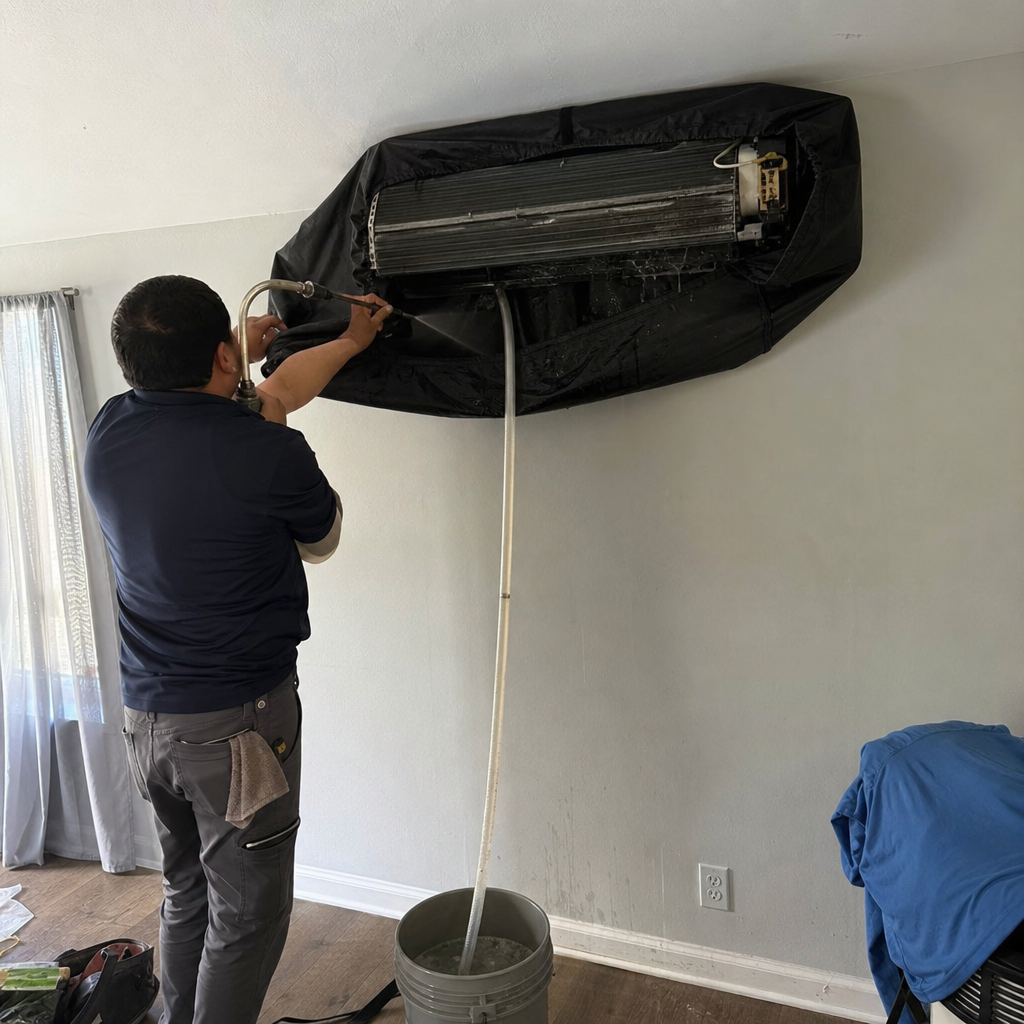
After cleaning, we apply a specialized coil treatment that creates a hydrophilic surface — water sheets off rather than beading, which reduces the standing moisture that mold colonies need to establish. On Wilmington Island, where the ambient humidity alone is often enough to keep a coil damp for hours after the system cycles off, this treatment extends the clean interval by 30–50%. We use EPA-registered treatments compatible with the aluminum and copper alloys common in residential coils, and we never apply anything that would compromise your manufacturer’s warranty. For homes with allergy sufferers or recent water intrusion events, we can also apply a more aggressive antimicrobial that targets the specific mold species we’ve identified in local ductwork samples — primarily Cladosporium and Aspergillus strains that thrive in salt-marsh environments.
What happens when you call
- 1
A real person answersNo phone trees — you reach a local pro.
- 2
You get an upfront price rangeHonest numbers before anyone is dispatched.
- 3
A background-checked tech heads outLicensed & insured, dispatched right away.
- 4
You approve before work beginsNothing starts until you say go.
Trusted Brands We Service in Wilmington Island
We clean and service all major HVAC brands found in Wilmington Island homes — Carrier, Trane, Lennox, Rheem, Goodman, and Bryant are the most common in the island’s 1960s–1990s housing stock. For air quality upgrades after cleaning, we install Honeywell and Aprilaire whole-house media filters and UV germicidal lights in-house, which means you don’t need a second contractor to close the loop from dirty ducts to genuinely cleaner air. We stock common replacement parts for these brands locally, so if your cleaning reveals a failing capacitor, corroded contactor, or cracked drain pan, we can often complete the repair during the same visit rather than ordering parts and rescheduling.
Common HVAC Cleaning Problems We See in Wilmington Island Homes
- Salt corrosion in galvanized ductwork: Airborne salt from the Wilmington and Bull Rivers infiltrates duct seams and corrodes galvanized metal within 3–5 years, compared to the 10+ year lifespan you’d see in inland Savannah neighborhoods. We find this most often in homes within a quarter-mile of the marsh edge, where prevailing southeast winds carry salt spray directly into attic vents and crawlspace openings.
- Flex duct liner degradation from ground moisture: Wilmington Island’s pier-and-beam crawlspaces sit above saturated soil and marsh edges, exposing flex duct liners to near-constant water vapor. The liner adhesive fails, the insulation sags, and the inner liner tears — creating a debris trap that standard vacuum cleaning can’t fully address without contact brushing.
- Standing condensation in low-lying crawlspace runs: After king-tide events, we regularly find minor flood silt and standing water in duct runs beneath older ranch homes near the marsh. This isn’t just dirty — it’s actively feeding mold colonies that recolonize within weeks of a superficial cleaning. Our protocol includes full extraction, antimicrobial treatment, and documentation of any duct runs that need repair or rerouting above the flood line.
- Biofilm-choked evaporator coils from year-round humidity: Coastal Chatham County’s persistent humidity means coils never fully dry between cycles, creating a gelatinous biofilm that standard foaming cleaners struggle to penetrate. We use extended-dwell cleaning agents and mechanical agitation to break through this layer, then treat the bare metal to slow regrowth in an environment where “dry” is a relative term.
Pricing for HVAC Cleaning in Wilmington Island, GA
| Service | Typical Range in Wilmington Island |
|---|---|
| Evaporator coil cleaning | $180–$340 |
| Blower cleaning | $140–$260 |
| Condenser cleaning | $120–$220 |
| Air handler cleaning (full cabinet) | $280–$450 |
| Coil treatment (antimicrobial) | $85–$150 |
| Complete HVAC system cleaning | $480–$820 |
What moves you within these ranges? Accessibility matters — a crawlspace air handler on Marsh Harbor Drive with six inches of clearance costs more to service properly than a garage-mounted unit on a raised slab. The severity of buildup affects time on site; a coil with two years of biofilm in a salt-marsh environment takes longer than a maintained system in drier Whitemarsh Island. We don’t quote blind. Call (877) 565-7296 for a free, no-obligation estimate — Scott Gray will inspect your system and give you an exact price before any work begins.
We Also Serve Cities Near Wilmington Island
Our service radius covers the full coastal Chatham County corridor. We regularly clean HVAC systems in Whitemarsh Island homes with similar salt-air exposure, Savannah historic districts with aging ductwork in tight crawlspaces, Skidaway Island‘s golf-course communities with high-end systems requiring careful handling, and Garden City industrial-adjacent neighborhoods where particulate loading is the primary concern. Each area gets the same owner-led service, but the specific protocol varies based on local environmental stressors — salt on the islands, age in the historic core, dust near the port.
Serving Wilmington Island, GA — Our Local Coverage Area
We’re based in the Wilmington Island area and know this community well. Use the map below to see our service coverage — if you’re nearby, we can almost certainly help.
FAQs — HVAC Cleaning in Wilmington Island
Wilmington Island’s barrier island position surrounded by tidal salt marsh creates a microclimate of relentless humidity and airborne salt infiltration that inland Savannah neighborhoods simply don’t experience. Ductwork here accumulates biofilm, mold spores, and corrosion 2–3 times faster than in higher-elevation ZIP codes just a few miles west, making cleaning a mechanical necessity rather than a routine upsell. If you’re comparing maintenance schedules with friends in Ardsley Park or the Historic District, cut their interval in half for your island home. Call (877) 565-7296 and we’ll assess your specific exposure based on your lot’s elevation and proximity to the marsh.
Most Wilmington Island homes need comprehensive HVAC cleaning every 18–24 months, with condenser cleaning annually for river-facing properties. Homes in low-lying areas near the marsh with crawlspace ductwork may need coil and air handler cleaning every 12–18 months due to accelerated biofilm growth. We serviced a 1970s split-foyer home on Marsh Harbor Drive where the crawlspace flex ducts had standing condensation from king-tide groundwater intrusion — our Rotobrush system extracted mud residue and mold colonies from the metal trunk lines, then we applied an antibacterial coil treatment to prevent regrowth. That homeowner now books every 14 months. Call (877) 565-7296 to set an interval based on your home’s specific conditions.
Yes — we deploy Rotobrush contact-cleaning systems with flexible shaft extensions that navigate the tight, sagging flex duct common in Wilmington Island’s pier-and-beam crawlspaces, paired with Nikro HEPA vacuums that contain mold spores during extraction. For standing water or silt intrusion, we use portable extraction pumps before cleaning begins, and Abatement Technologies air scrubbers to maintain negative pressure and protect your living space. This isn’t standard equipment for every air duct cleaner; it’s the same setup we use for commercial remediation work where containment matters. If your crawlspace has flooded before, mention it when you call (877) 565-7296 — we’ll bring the full kit.
Cleaning removes the accumulated salt deposits and biological growth that accelerate corrosion, but it cannot reverse pitting that’s already eaten through galvanized coating. What we can do is inspect and document corrosion severity, then recommend next steps — sometimes that’s a localized duct repair and sealing, sometimes it’s replacement of a corroded trunk line before it fails completely. We’ve found that proactive cleaning every 18 months, combined with coil treatment that reduces condensation, slows the corrosion cycle measurably compared to neglected systems. For a frank assessment of whether your ductwork is salvageable or nearing end-of-life, call (877) 565-7296 for a free inspection.
Absolutely — and on Wilmington Island, “always humid” describes nearly every unconditioned attic we’ve entered. We time our work to minimize heat stress on our technicians, but the equipment doesn’t care about temperature; our Nikro HEPA vacuums and Rotobrush systems operate effectively in attic conditions up to 140°F. The real challenge is ensuring the cleaning itself doesn’t introduce more moisture. We use dry-contact brushing and HEPA extraction rather than steam or water-based methods in humid attics, and we verify that supply plenums are fully dry before we seal them back up. If your attic ducts have condensation on the exterior wrapping, that’s a sign of inadequate insulation or air leakage — we’ll flag it during cleaning and explain your options. Call (877) 565-7296 to schedule.
Ready to protect your Wilmington Island home from the salt, humidity, and mold that your HVAC system battles every day? Scott Gray will inspect your system, explain exactly what we’re seeing, and give you an upfront price before any work starts. No subcontractors, no dispatchers, no surprises — just twenty years of crawlspace-level expertise applied to your specific home.
Call Everest Air Duct Cleaning at (877) 565-7296 for your free Wilmington Island HVAC cleaning estimate.
Written by Scott Gray, Owner at Everest Air Duct Cleaning Service Georgia, serving Wilmington Island and coastal Chatham County since 2004.