
Fast, Reliable Duct Repair & Sealing Across Sandy Springs
Duct repair and sealing in Sandy Springs typically costs $280–$650 for most residential jobs, with same-day diagnostics available throughout the 30328 corridor. We’re usually on-site within 45 minutes of a call from neighborhoods like Huntcliff, Rivercliff, or the Pill Hill area — Scott Gray has spent 20 years crawling attics in these exact subdivisions, and we know which 1980s-era systems are hiding three generations of flex duct behind the drywall.
Sandy Springs isn’t a cookie-cutter market. The city’s concentration of 4,000-plus-square-foot custom homes from the 1970s–1990s boom means we’re working on complex, multi-zone systems that newer-tract techs rarely encounter. When your flex duct is sagging through a hot attic off Glenridge Drive or your mastic seals have dried out near the Chattahoochee bottomlands, you need someone who recognizes the specific failure patterns these homes develop. Call (877) 565-7296 — we’ll inspect the system and give you a straight estimate before any work starts.
Why Everest Air Duct Cleaning Service Georgia Is Sandy Springs’s Preferred Duct Repair & Sealing Company
We’ve built our reputation in Sandy Springs one attic at a time. Scott Gray, our owner and lead technician, has personally handled duct repair and sealing jobs from the Huntcliff subdivisions off Roberts Drive to the river-adjacent homes near Morgan Falls — and our Duct Repair & Sealing team doesn’t hand you off to a subcontractor. You get the same technician with two decades of crawlspace-level experience on every call.
Our numbers are public and verifiable: 433 customer reviews averaging 4.9 stars. That’s one of the highest review volumes in the air duct cleaning niche, and a significant share of those come from repeat Sandy Springs customers who started with a cleaning and called us back when their aging flex duct needed actual repair. We’re not a franchise dispatching entry-level crews from a call center — Scott works the jobs directly.
Response time matters in July when your upstairs zone is blowing 80-degree air. We keep our equipment — Rotobrush contact-cleaning systems, Nikro HEPA vacuums, Abatement Technologies air scrubbers — loaded and ready for Sandy Springs calls. Most days, we’re diagnosing systems in the 30328 zip code within the hour.
Our Duct Repair & Sealing Services in Sandy Springs
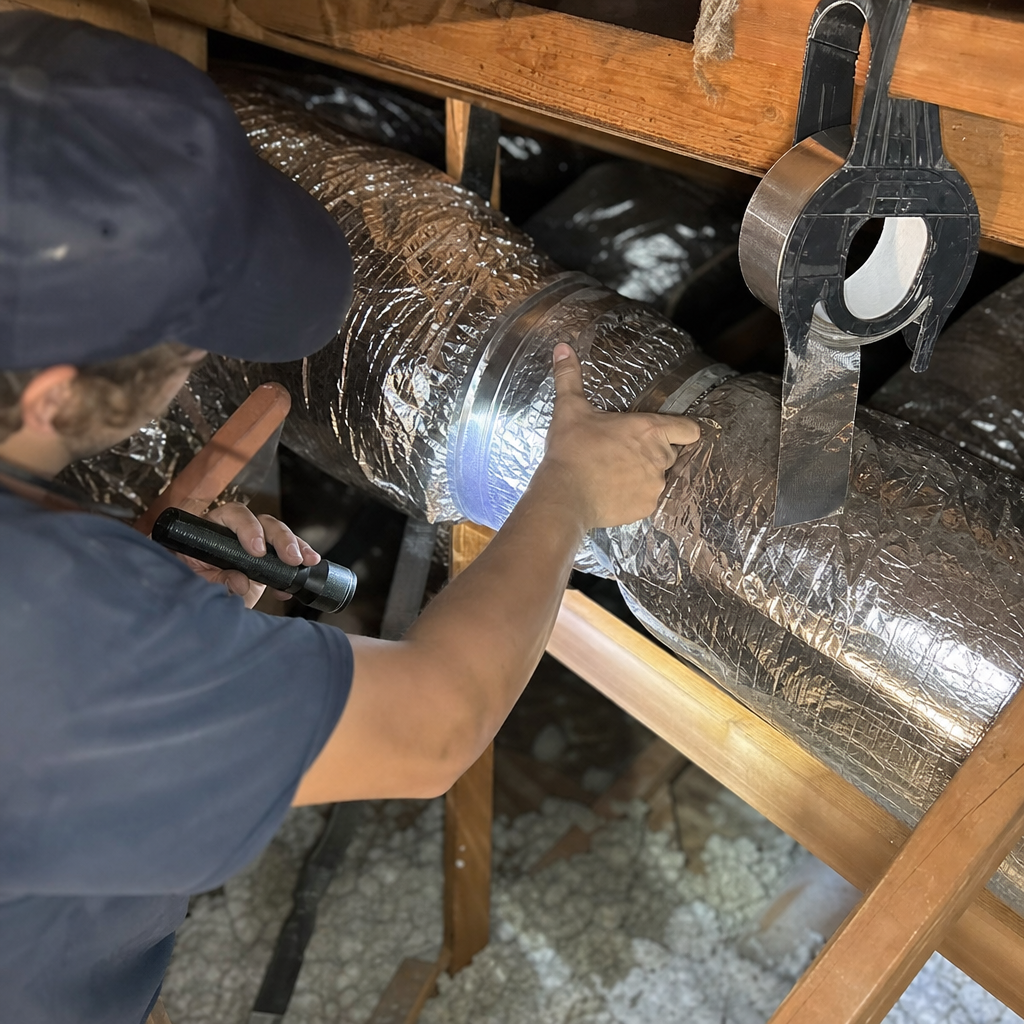
Flex Duct Repair
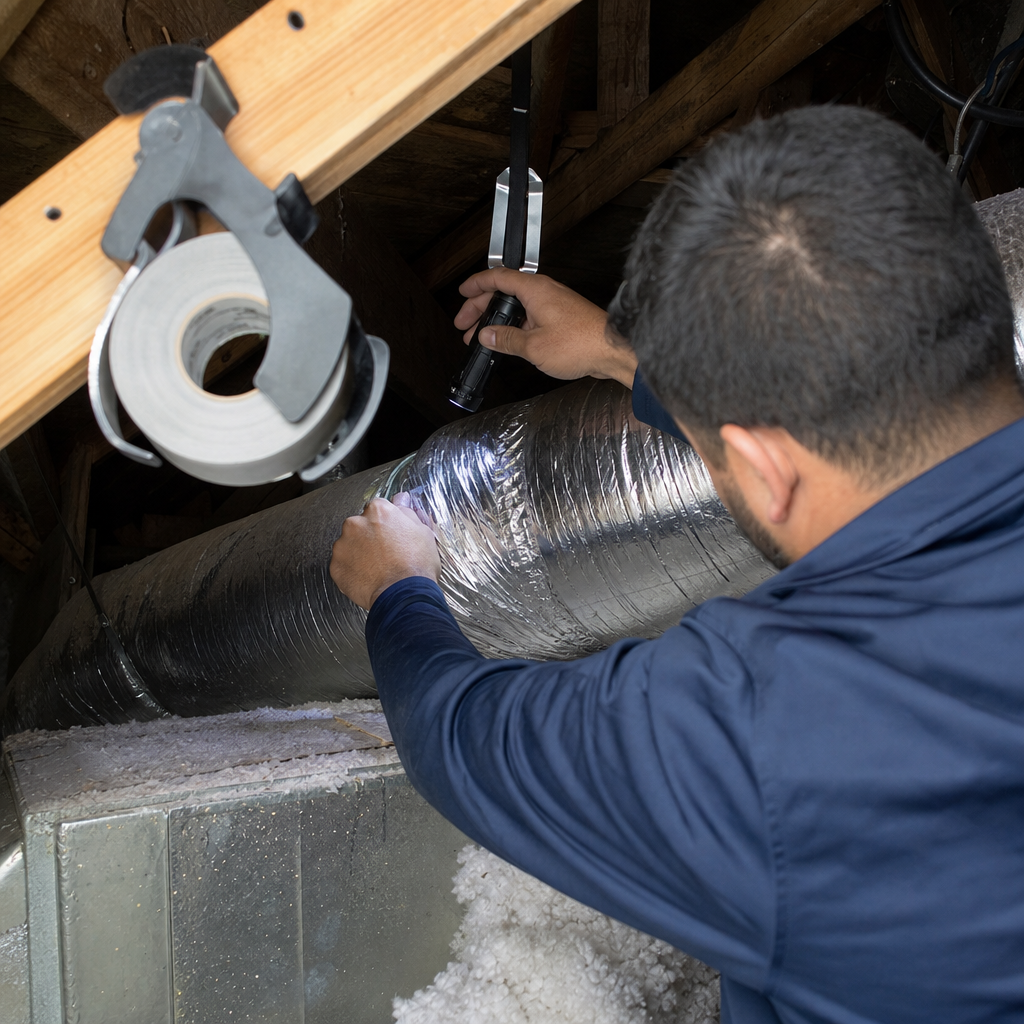
This is our most frequent call in Sandy Springs, and for specific reasons. The dominant housing stock here — large 1970s–1990s subdivisions with multi-story homes — relies on extensive fiberglass flex duct runs through unconditioned attics. After 30–40 years, that flex duct sags at joist crossings, kinks where 1990s bonus-room extensions were shoehorned in, and disconnects at splices. We replace damaged runs with properly supported new flex, sized correctly for the original system’s CFM design. In the Huntcliff neighborhood off Roberts Drive, we repaired a 1980s system where three generations of flex duct—original 6-inch, oversized 8-inch extensions added for a bonus room, and a mini-split bypass—were spliced together. We sealed mismatched joints with mastic and replaced a kinked 8-inch run near an attic joist, restoring airflow to the second story. The homeowner noted an immediate drop in dust and pollen circulation.
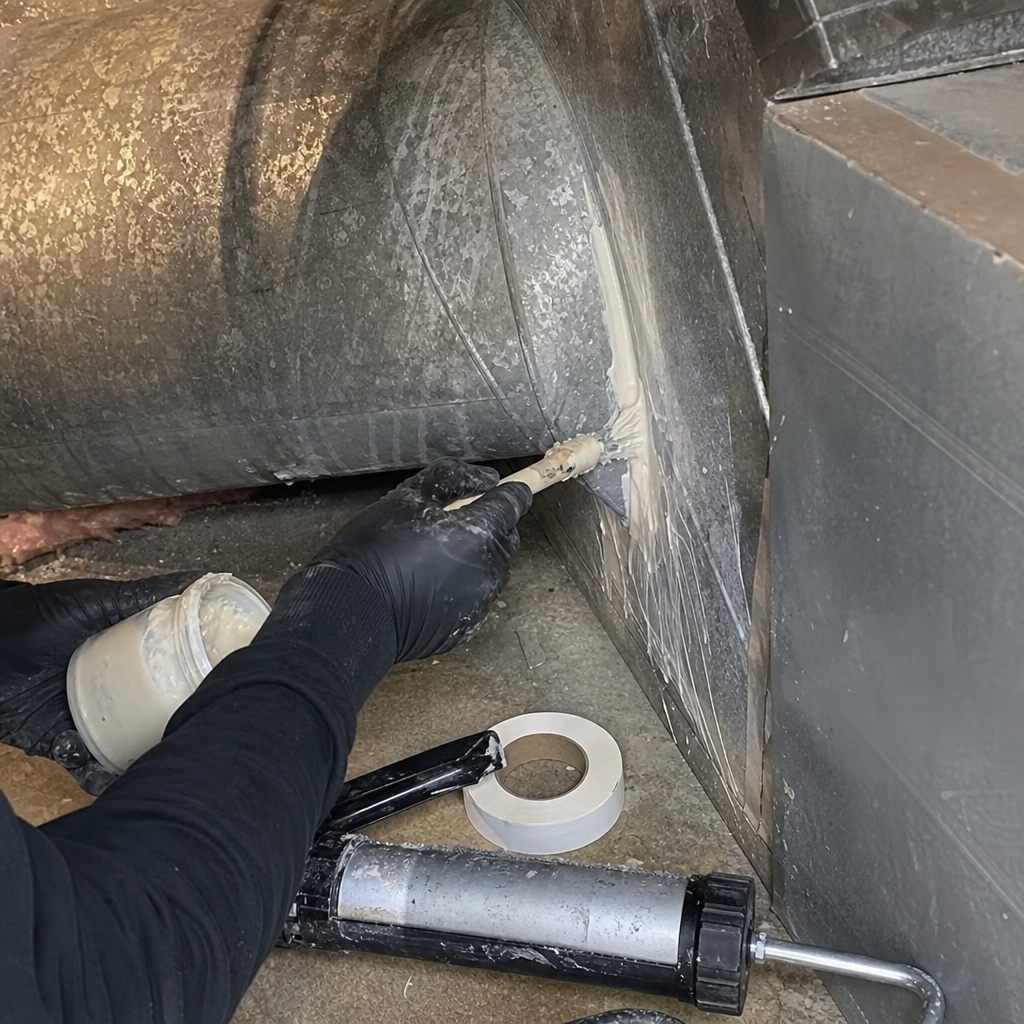
Mastic Sealant Application
Metal tape fails. In Sandy Springs’s hot attics, the adhesive degrades and the tape lifts at seams. We apply water-based mastic sealant — brushed or sprayed — to all accessible joints, boots, and plenum connections. Mastic remains flexible through decades of thermal cycling, and it’s the only sealant we trust for the hybrid systems common here, where original metal trunk lines meet 1990s flex extensions and mini-split bypasses. A properly mastic-sealed system in a Sandy Springs home can reduce duct leakage from 25–30% down to 5% or less, which directly addresses the pollen infiltration that the city’s dense hardwood canopy forces through every gap.
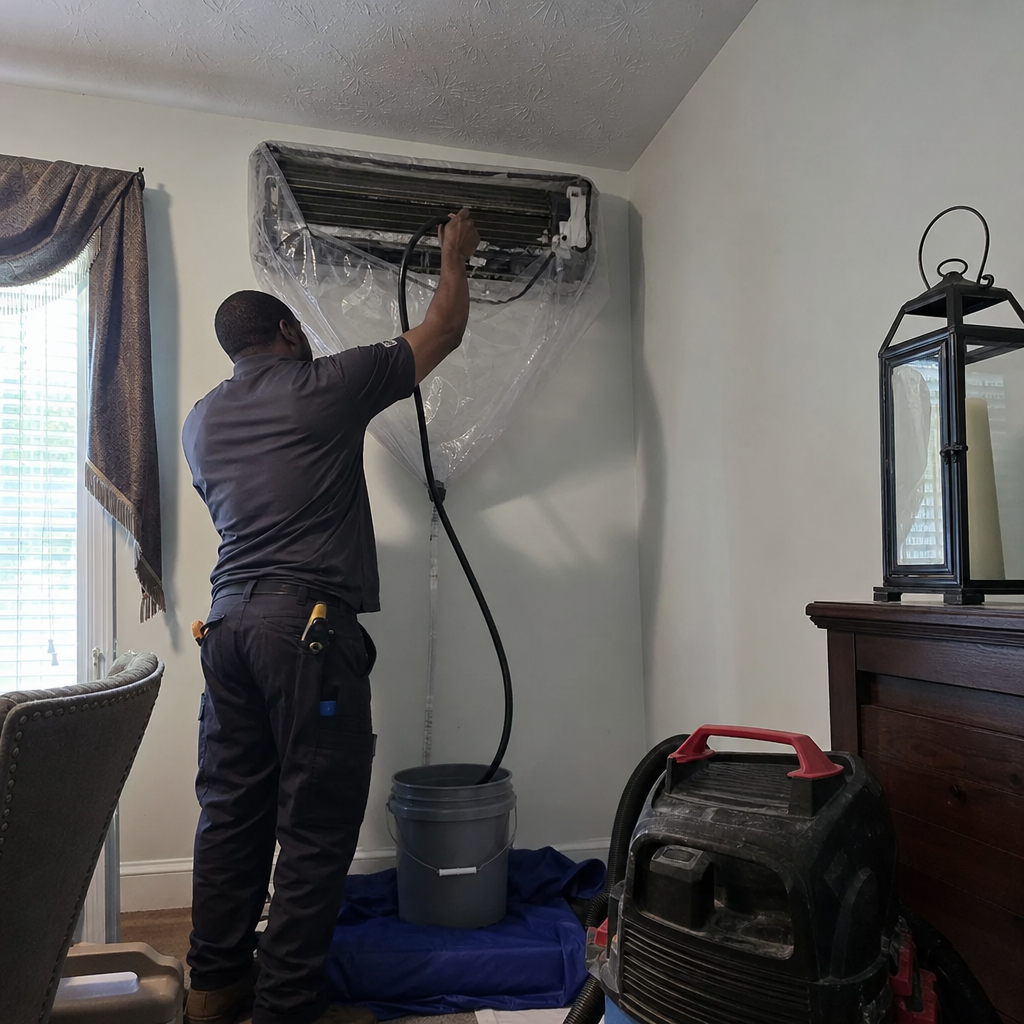
Air Leak Repair
Unsealed return plenums, disconnected boots, and corroded flanges — we find these on nearly every Sandy Springs inspection. The combination of high pollen loading from the tree canopy ordinance and the elevated humidity in western corridors near the Chattahoochee River bottomlands means leaked return air isn’t just inefficient; it’s pulling unfiltered, moisture-laden air into the system. That creates conditions favorable for microbial colonization on fiberglass duct liner. We pressure-test the system, locate leaks with smoke pencils and thermal imaging, then repair with mechanical fastening plus mastic. No guesswork.
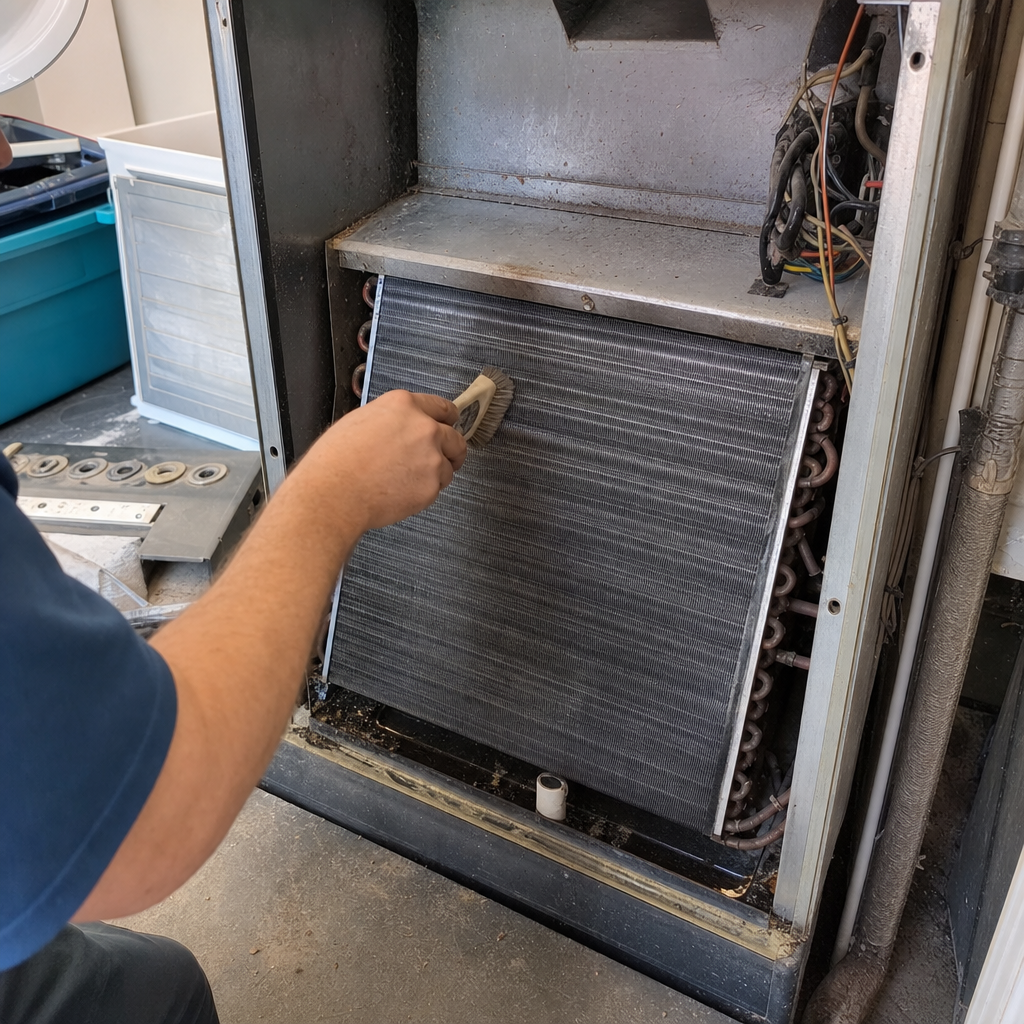
Duct Insulation Repair
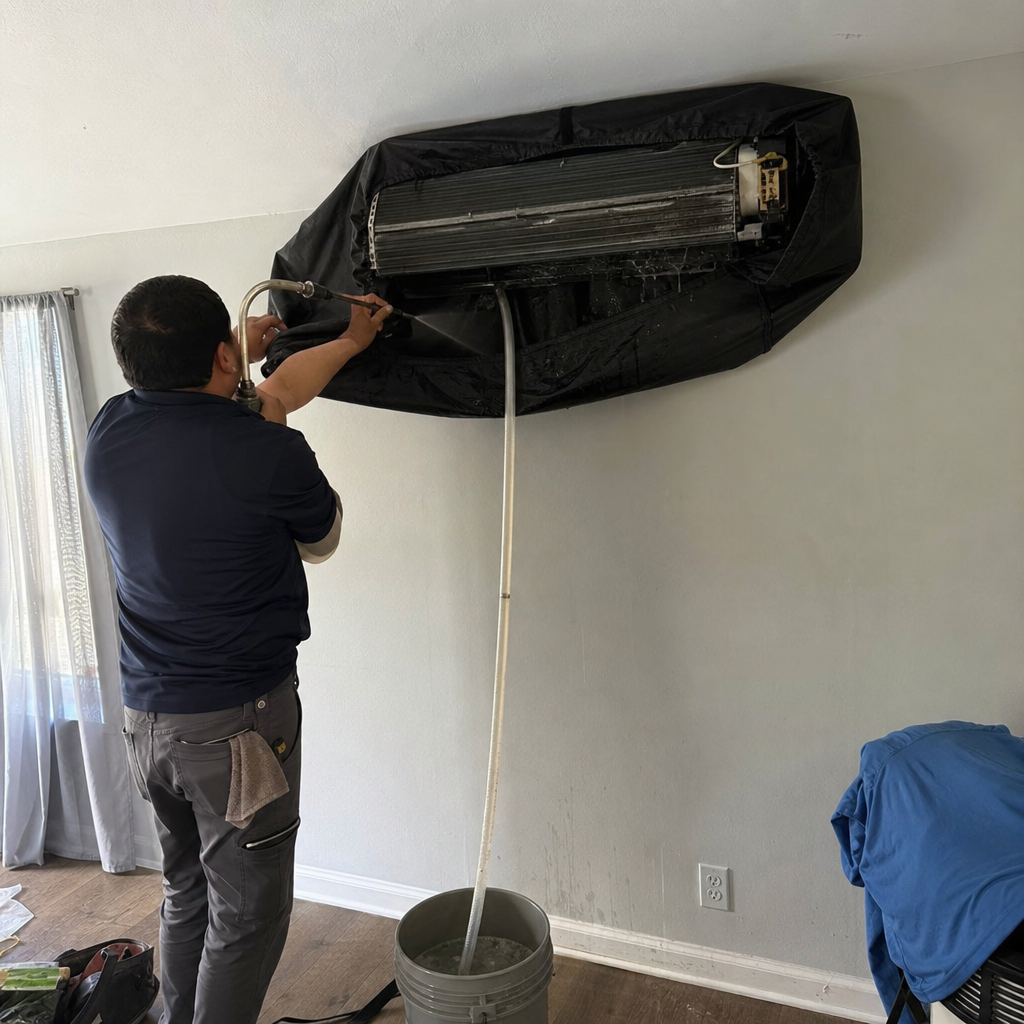
R-6 and R-8 flex duct insulation in Sandy Springs attics takes a beating. Roof rats, condensation damage, and simple compression over joists reduce R-value and create cold spots where moisture collects. We replace compromised insulation sections with fresh, properly vapor-barriered material — critical in these large homes where duct runs can exceed 50 linear feet and every degree of thermal loss multiplies across the system.
What happens when you call
- 1
A real person answersNo phone trees — you reach a local pro.
- 2
You get an upfront price rangeHonest numbers before anyone is dispatched.
- 3
A background-checked tech heads outLicensed & insured, dispatched right away.
- 4
You approve before work beginsNothing starts until you say go.
Trusted Brands We Service in Sandy Springs
We don’t show up guessing. Our trucks carry Honeywell and Aprilaire air quality components — media filters, electronic air cleaners, whole-home dehumidistats — because many Sandy Springs homeowners want to close the loop from duct repair to genuinely cleaner air. For the repair work itself, we source flex duct, fittings, and mastic from standard HVAC supply houses, but our diagnostic and cleaning equipment is specific: Rotobrush contact-cleaning for pre-repair agitation, Nikro HEPA extraction for debris removal, and Abatement Technologies air scrubbers if we’re working in a contained attic space during active microbial remediation. That equipment roster matters when you’re working in a 4,500-square-foot home with three air handlers and a homeowner who researches before they call.
Common Duct Repair & Sealing Problems We See in Sandy Springs Homes
- Multiple generations of flex duct spliced together. Original 6-inch runs from the 1980s builder, oversized 8-inch extensions for 1990s bonus rooms, and sometimes a mini-split bypass — all with different seal conditions, different debris accumulation, and different structural integrity. Homeowners often assume one cleaning addresses everything; it doesn’t.
- Sagging and kinking at attic joist crossings. Especially in the oversized 8-inch extensions added during renovations. Hot, unconditioned Sandy Springs attics soften the flex duct wire helix over decades, and gravity does the rest. We find 30–40% airflow restriction at these points routinely.
- Pollen infiltration through unsealed joints. The city’s tree canopy preservation ordinance maintains a dense hardwood overstory that loads HVAC intake surfaces season after season. When your return plenum is pulling air through a gap in the basement or attic, that pollen bypasses your filter entirely.
- Microbial growth on fiberglass duct liner. The western corridors near the Chattahoochee River bottomlands experience elevated ambient humidity throughout the long cooling season. Combine that with unsealed leaks pulling in moisture-laden air, and you get conditions where fiberglass liner becomes a substrate for colonization.
Pricing for Duct Repair & Sealing in Sandy Springs, GA
| Service | Typical Range in Sandy Springs |
|---|---|
| Mastic sealant application (full accessible system) | $280–$450 |
| Flex duct repair / section replacement (per run) | $180–$340 |
| Air leak diagnosis and targeted repair | $220–$380 |
| Duct insulation repair / replacement (per run) | $160–$290 |
| Full system inspection with written report | $0 (free with any repair) |
What moves you within these ranges? Three factors: accessibility (tight attics take longer), the extent of hybrid-system complexity (more splice generations = more labor), and whether we’re addressing active microbial issues that require containment protocol. We don’t quote over the phone for duct repair — we need eyes on the system. The inspection is free, the estimate is firm, and Scott Gray explains what he’s seeing before you decide. Call (877) 565-7296 to schedule.
We Also Serve Cities Near Sandy Springs
Our service radius covers Dunwoody to the north, Brookhaven to the southeast, North Atlanta along the GA-400 corridor, and Vinings to the southwest. Many of our Sandy Springs customers found us through referrals from these neighboring communities — or vice versa — because the same 1970s–1990s housing stock patterns repeat across the north metro. Wherever your ductwork is failing, we’ll drive to it.
Serving Sandy Springs, GA — Our Local Coverage Area
We’re based in the Sandy Springs area and know this community well. Use the map below to see our service coverage — if you’re nearby, we can almost certainly help.
FAQs — Duct Repair & Sealing in Sandy Springs
The dense hardwood overstory maintained by the city’s preservation ordinance loads HVAC systems with pollen that infiltrates through every unsealed duct joint. In Sandy Springs, we prioritize mastic sealing on return sides specifically because that pollen bypasses filters when pulls are leaky — something we see far less in cleared suburban developments. Call (877) 565-7296 and we’ll pressure-test your system for infiltration points; estimates are free.
These homes were built large during the 1970s–1990s boom, then expanded with bonus rooms and in-law suites in the 1990s–2000s using aftermarket flex duct extensions. The original 6-inch runs, the oversized 8-inch additions, and any mini-split bypasses create hybrid systems with mismatched materials and seal conditions. We map the full system before quoting repair so you know what’s original, what’s added, and what needs attention. Scott Gray walks you through it personally — call (877) 565-7296.
Sagging and kinking at attic joist crossings, especially in the 8-inch extensions added for second-story or bonus-room zones. The hot, unconditioned attics in these large homes soften the flex duct’s wire helix over decades, and the weight of the duct itself creates airflow restrictions of 30% or more. We replace these runs with properly supported new flex sized to the original CFM design. If you’re in Huntcliff, Rivercliff, or similar 1980s-era subdivisions, we’ve likely already fixed this exact issue on your street.
Yes — more common than in newer construction markets. The extensive flex duct runs in these 3,500–4,500-square-foot homes pass through hot attics where insulation compresses, vapor barriers fail, and roof rats occasionally nest. We replace compromised sections with fresh R-6 or R-8 material as part of larger repair jobs, not as a standalone service. During your free inspection, we’ll flag any insulation that’s contributing to thermal loss or condensation risk.
Absolutely — it’s one of the most effective measures for Sandy Springs specifically. Sealing return-side leaks with mastic prevents the system from pulling unfiltered, pollen-laden air from attics, crawlspaces, or wall cavities. We measure leakage before and after repair with a duct blaster or pressure pan, and homeowners with allergy sufferers consistently report reduced symptoms after proper sealing. For maximum benefit, pair sealing with a Honeywell or Aprilaire media filter upgrade — we install both in-house. Call (877) 565-7296 for an exact quote.
Written by Scott Gray, Owner at Everest Air Duct Cleaning Service Georgia, serving Sandy Springs and the greater Atlanta area since 2004.